How to Keep Your Upper Body Relaxed on Long Climbs
You can either brace against a long climb or stay loose enough to use your strength efficiently. I’ll show you the first practical cues for relaxing your shoulders, hands, elbows, breathing, and seated posture.
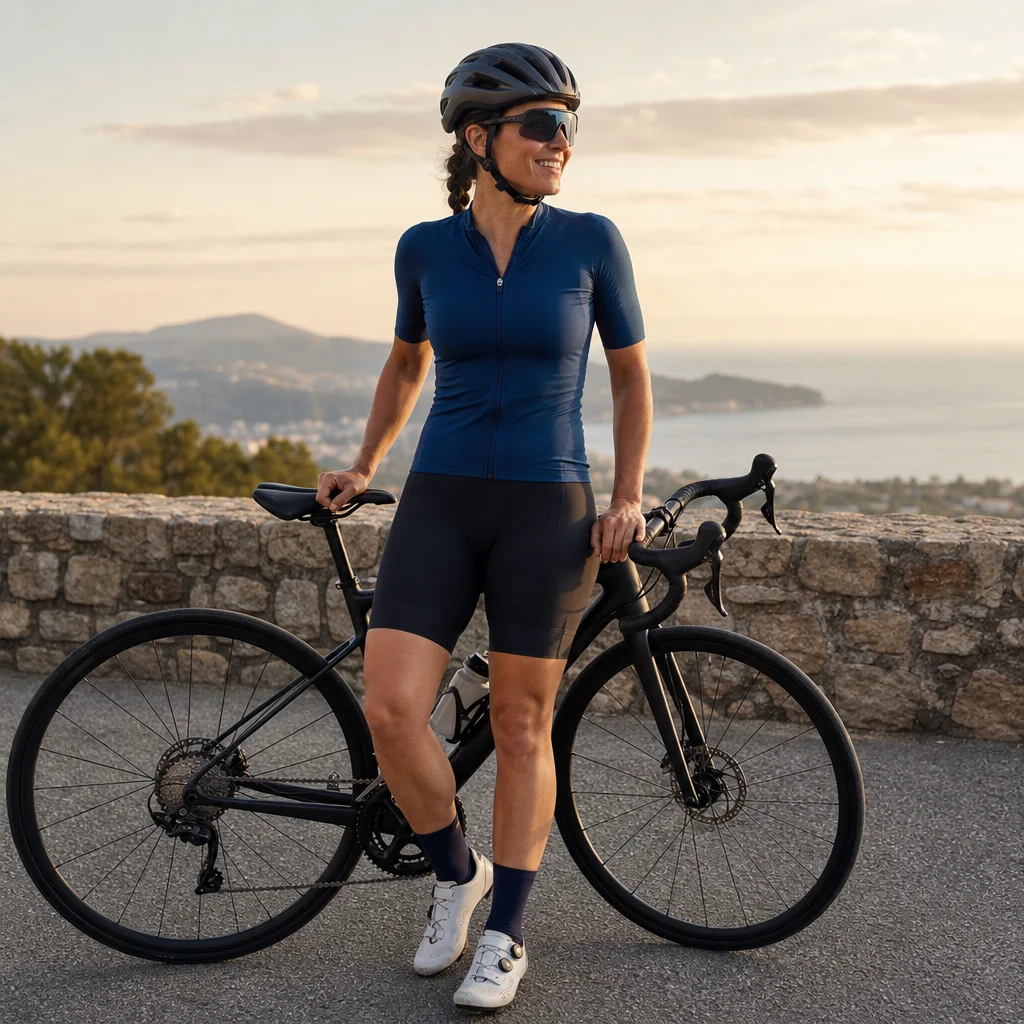
Long climbs often create tension before they create real fatigue. As the gradient continues, you may shrug your shoulders, grip the bars harder, lock your elbows, and hold your breath without noticing. Those habits make your upper body feel heavy and can leave your legs working against unnecessary resistance.
The goal isn’t to make your upper body completely limp. You need enough support to steer, balance, and keep your position stable. Instead, aim for a quiet upper body: shoulders down, hands light, elbows soft, and breathing steady while your legs do most of the work.
Start with your hands and shoulders
Your hands are an easy place to detect rising tension. If your fingers are wrapped tightly around the bars, that effort usually travels up through your forearms to your shoulders and neck.
Try this sequence on a moderate section of the climb:
- Notice how firmly you’re holding the bars.
- Uncurl your fingers slightly without losing contact.
- Let your shoulders drop away from your ears.
- Take one slow, relaxed breath.
- Return your attention to the road and your pedaling rhythm.
You don’t need to repeatedly shake out your hands. A small reduction in grip pressure is enough. Your hands should guide the bike, not squeeze it as if you’re trying to pull yourself up the hill.
Keep your wrists in a comfortable, mostly straight position. Avoid bending them sharply backward or allowing them to collapse under your weight. A neutral wrist makes it easier to keep your grip light and reduces strain in your forearms.
Use a simple shoulder check
Pick a short section of road—perhaps between two visible markers—and ask yourself three questions:
- Are my shoulders creeping toward my ears?
- Are my elbows locked?
- Can I breathe without lifting my chest and tightening my neck?
If the answer to any question is yes, reset one part at a time. Start by lowering your shoulders, then soften your elbows, then settle into a smooth breath. Trying to fix everything at once can create another layer of tension.
Keep your elbows soft
Locked elbows transmit every bump and movement directly into your shoulders. They also make it harder for your upper body to follow small changes in balance as the gradient, surface, or pace changes.
Think of your elbows as slightly unlocked rather than deliberately bent. You don’t need an exaggerated cycling position. Just leave enough flexibility for your arms to act as a small suspension system.
Your elbows should generally point down and slightly out, not flare dramatically to the sides. A relaxed angle lets your arms support you without making your chest and shoulders work harder than necessary.
If you catch yourself pushing straight down through rigid arms, bring your attention back to your hands. Lighten the grip first. Soft elbows usually follow naturally.
Let your breathing set the rhythm
Tension often shows up as shallow breathing or brief breath-holding, especially when the climb steepens. That can make the effort feel more urgent than it needs to be and encourages your shoulders to rise.
Use your exhalation as a reset. As you breathe out, consciously release your jaw, lower your shoulders, and allow your hands to loosen. You don’t need a special breathing pattern; you need a steady one that matches your effort.
On a sustained climb, try to make your breathing regular enough that you can recognize its rhythm. If you can speak only in very short fragments, you may be riding harder than planned. Ease the pace slightly before your upper body becomes rigid.
The exact point at which a climb becomes too hard varies with fitness, heat, altitude, sleep, and other conditions. Treat severe breathlessness, chest pain, dizziness, unusual weakness, or symptoms that don’t settle with rest as reasons to stop and seek appropriate medical help rather than trying to relax through them.
Check your warning signs: Before continuing a hard climb, make sure your tension is ordinary exertion rather than pain, numbness, dizziness, or unusual shortness of breath. Stop and get help when symptoms are concerning or don’t improve with rest.
Find a stable seated posture
A relaxed upper body starts with a position that doesn’t require you to brace constantly. When seated, keep your weight balanced over the saddle and bars rather than collapsing heavily onto your hands.
Your torso should lean forward from the hips, not fold sharply through the waist. Keep your back in a natural position and allow your head to stay aligned with your spine. You’ll need to look ahead, but avoid reaching your chin forward and tightening the muscles at the base of your neck.
On a long climb, check whether you’re sliding toward the front of the saddle. This can happen when the gear is too hard or when you’re trying to keep the front wheel planted on a steeper section. Moving forward occasionally may be useful, but constantly supporting yourself by pressing into the bars is a sign that something needs adjusting—usually your pace, cadence, or position.
Your pelvis should feel reasonably stable as you pedal. If your hips rock from side to side, lower your effort or shift to an easier gear. Rocking can be a sign that the gear is too hard for your current cadence, and it often causes your shoulders to brace in response.
Choose an easier gear before you tense up
Many riders try to solve climbing discomfort with posture alone while continuing to push an overly hard gear. That usually doesn’t work for long. As the effort rises, your cadence slows, your breathing becomes strained, and your upper body starts helping by pulling against the bars.
Shift to an easier gear before the climb forces you into that pattern. A slightly quicker, controlled cadence often makes it easier to keep your shoulders and hands relaxed. You may feel as if you’re working harder at first because your legs are turning faster, but the movement should be smoother and less forceful.
Make the shift while you still have enough momentum to pedal smoothly. Avoid waiting until you’re grinding slowly and then making several abrupt changes. The best gear is the one that lets you maintain a steady effort without rocking, holding your breath, or pulling hard on the handlebars.
Be careful when standing
Standing can give your seated muscles a brief change of position, but it can also increase upper-body tension. Riders often pull on the bars, shrug their shoulders, and swing the bike more than necessary when they rise from the saddle.
Before standing, shift to a gear that won’t force you to surge suddenly. Keep your hands secure but not clenched, and allow the bike to move gently beneath you while your body remains controlled. Your elbows should still be soft, and your shoulders should stay away from your ears.
Use standing as a deliberate tool rather than a reaction to every steep section. A few pedal strokes may help you change position or crest a short ramp. For a long climb, returning to a comfortable seated rhythm is usually less tiring for your upper body.
Practice one cue at a time
Trying to monitor five body parts continuously can make you more tense. Instead, divide the climb into short checkpoints:
- Early climb: choose an easy enough gear and settle your breathing.
- Middle section: release your grip and lower your shoulders.
- Steeper ramp: soften your elbows and keep your eyes looking ahead.
- Final section: stay seated if practical and avoid sprinting with your upper body.
You can also use a short phrase such as “light hands” or “shoulders down.” Repeat it at regular landmarks rather than waiting until you feel exhausted. The cue should remind you to reset, not criticize your form.
Practice these changes on familiar climbs where you can focus on technique. Don’t experiment with a new position while descending, riding in traffic, or dealing with a rough surface. Relaxation should never reduce your control of the bike.
When tension keeps returning
Persistent upper-body tension may come from pacing or habit, but it can also reflect a bike-fit issue. Check whether your handlebars feel too far away or too low, whether you’re reaching excessively, or whether your saddle position makes you support too much weight through your hands.
You don’t need to change several adjustments at once. First observe when the tension appears and whether it affects both sides equally. Note any hand numbness, neck pain, shoulder pain, or discomfort that continues after the ride. A qualified bike fitter or cycling-knowledgeable health professional can help distinguish technique from equipment or physical concerns.
Your next long-climb practice
On your next sustained climb, begin below your maximum effort and use this short checklist:
- Shift early enough to keep your pedaling smooth.
- Hold the bars lightly, with neutral wrists.
- Lower your shoulders and relax your jaw.
- Keep your elbows slightly unlocked.
- Breathe steadily instead of bracing through the bars.
- Keep your hips stable and your torso supported from the saddle.
- Stand only when it helps, not because tension has taken over.
You won’t maintain perfect relaxation for an entire climb, and you don’t need to. Notice tension sooner, reset one cue, and return to a sustainable rhythm. With practice, a quiet upper body becomes less something you force and more the natural result of sensible pacing and a stable position.