Cornering on a Road Bike: A Repeatable Technique for Nervous Riders
Fast cornering isn't always better than controlled cornering. I’ll show you how to manage speed, vision, body position, and line choice so bends feel more predictable from the first practice session.
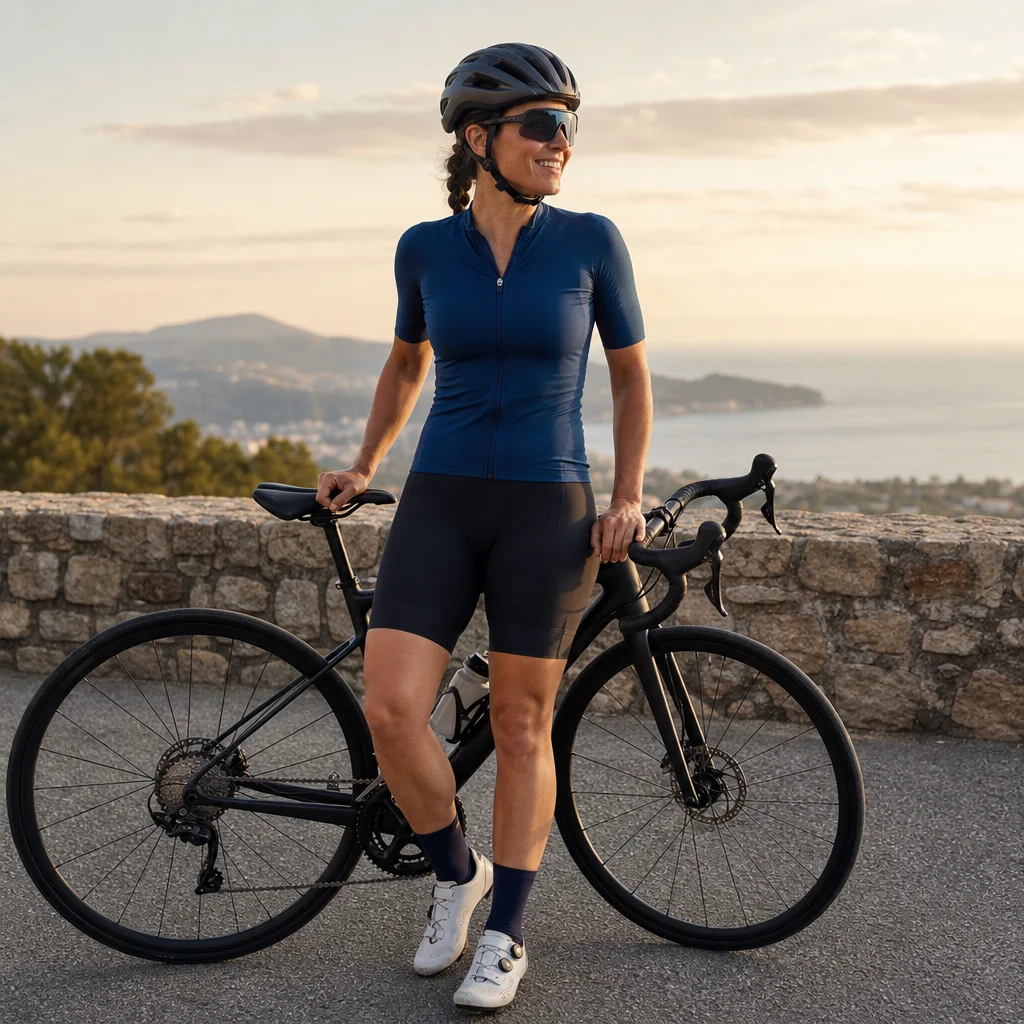
Feeling tense before a corner can make you brake too late, stare at the road directly ahead, or steer abruptly. The solution isn’t to force yourself to corner faster. It’s to use the same simple sequence each time, at a speed that leaves you room to adjust.
Cornering becomes more manageable when you separate it into decisions: prepare before the turn, look through it, stay balanced while turning, and accelerate only when the exit is clear. You can practice these skills on quiet, familiar roads without chasing speed.
The repeatable cornering sequence
Use this order for most ordinary paved-road corners:
- Scan the corner and the road surface.
- Choose a comfortable entry speed.
- Brake while the bike is mostly upright.
- Set your gear and pedals before turning.
- Look toward the exit rather than at the obstacle.
- Use a smooth line and steady pressure through the bend.
- Pedal again when the bike is upright and the exit is open.
This sequence gives you fewer tasks to handle at the point where the corner demands attention. The exact speed and line will change with the road, weather, traffic, and visibility, but the process remains useful.
1. Read the corner before you enter it
Look beyond the immediate turn. Ask yourself:
- Is the corner tightening, opening, or staying consistent?
- Can you see the exit?
- Is there traffic, a parked car, a pedestrian, gravel, leaves, paint, a drain cover, or standing water?
- Is the road sloped, cracked, or unusually narrow?
- Will another rider or vehicle appear from the other direction?
A corner you can’t see through deserves more caution than a wide, open bend. If the exit is hidden, assume you may need to slow further. A blind corner isn’t the place to prove that your usual speed is acceptable.
Keep your attention on the whole road rather than one patch of pavement. This gives you more time to notice changing conditions and reduces the chance of making a sudden correction.
2. Set your speed before the turn
Your safest and most comfortable braking usually happens before you lean the bike. Start braking early, apply the levers progressively, and release most of the braking as you begin the turn.
You don’t need to reach a particular speed. Choose an entry speed that lets you hold a steady line, see the exit, and make a small adjustment if something changes. If you’re nervous, that may mean entering much slower than a more experienced rider would.
A common mistake is carrying too much speed into the corner and then braking hard while leaned over. That can upset your balance and make the bike feel as if it’s running wide. Another mistake is braking so early that you enter extremely slowly while still feeling tense. With practice, you’ll learn to brake firmly but smoothly, then coast or use light control through the turn.
Check the conditions before committing: Road grip and visibility can change quickly with rain, loose debris, poor lighting, traffic, or road damage. When you can’t clearly assess the corner, reduce speed and leave yourself extra space.
Use both brakes smoothly
Both brakes can help you slow down. The front brake generally provides substantial stopping power, while the rear brake can help with controlled speed reduction. Avoid grabbing either lever suddenly, especially once the bike is leaned.
Keep your hands relaxed enough to make small, deliberate lever inputs. If your arms lock straight, the bike may feel nervous and your steering corrections can become abrupt.
3. Choose your gear and pedal position
Shift before the corner when possible. A gear that is slightly easier than your approach gear can help you pedal smoothly once you exit, but you don’t want to be making a large shift while turning.
For a conventional right-hand corner, your right pedal should be up and your left pedal should be down. Reverse that position for a left-hand corner. The low pedal on the outside of the turn helps keep it clear of the road.
Stop pedaling while you’re at maximum lean unless you have a specific reason and enough clearance to do so. A pedal strike can disturb the bike suddenly, particularly on a tight corner or a turn with a pronounced lean.
4. Look through the corner
Your bike tends to follow your attention. If you stare at the curb, pothole, gravel, or edge of the road, you may drift toward it. Instead, turn your head and look toward the path you want to take, ideally through the corner and toward its exit.
This doesn't mean ignoring hazards. Scan for them early, decide how you’ll avoid them, and then return your focus to the open path. Looking farther ahead also gives you more time to recognize that a corner is tightening or that another road user is entering your line.
If turning your head makes you feel unstable, start with a small movement. Keep your shoulders and arms relaxed, and let your eyes lead before you rotate your head farther.
5. Keep your body balanced
A stable cornering position is quieter than many beginners expect. You don’t need to hang off the bike or make a dramatic movement.
Try these basics:
- Keep your outside foot down and apply light pressure through it.
- Bend your elbows slightly instead of locking your arms.
- Keep your hands light on the bars.
- Support your weight through the saddle, feet, and balanced contact with the bars.
- Keep your torso calm while allowing the bike to lean beneath you.
- Maintain a relaxed grip and steady breathing.
Your upper body should help the bike remain composed, not fight every small movement. A tense grip often makes normal steering feel more alarming than it is.
Separate steering from leaning
You steer primarily by looking where you want to go and making small handlebar inputs. The bike leans as it follows the turn. For a gentle corner, you may barely notice the difference; for a tighter corner, the lean becomes more obvious.
Avoid suddenly turning the bars toward the inside. Smooth, modest input is easier to control than a sharp movement. If the corner feels too tight or your speed feels wrong, prioritize slowing safely and widening your margin rather than trying to force the original line.
6. Choose a forgiving line
On a quiet, open road, a useful general line is to enter from the outside portion of your lane, move toward the inside near the middle of the corner, and allow the bike to open toward the outside on exit. This can make the turn less sharp.
However, don’t treat that line as a rule that overrides safety. Stay within your lane, maintain a margin from the road edge, and never cut across the centerline or into an oncoming lane. On a blind corner, position yourself so you can respond to traffic you can’t yet see.
Avoid riding close to the inside edge when there may be gravel, drainage problems, pedestrians, or vehicles. Likewise, don’t drift wide toward traffic or the road shoulder simply because the corner is tighter than expected. A slower entry gives you more options than an aggressive line.
7. Accelerate after the exit opens
Keep your speed steady through the middle of the corner. Once the bike is becoming upright, the road ahead is clear, and your intended line is secure, begin pedaling smoothly.
Pedaling too early can make you focus on producing power when you should be managing direction. Waiting until the exit is open lets you finish the turn first and accelerate second.
If you’ve entered too quickly, don’t panic. Keep your eyes up, stay smooth, and use controlled braking as needed. The best response depends on the road and traffic around you, but abrupt steering, hard braking, or crossing out of your lane can create a larger problem.
Practice without adding speed
Find a quiet area with clean pavement and good visibility, such as an empty parking area where cycling is permitted or a calm road with broad, gentle bends. Follow local access rules and avoid practicing where vehicles, pedestrians, or other hazards could surprise you.
Start with wide turns. Practice the sequence at walking-to-easy riding speed:
- Look through the turn.
- Brake before the turn.
- Put the outside pedal down.
- Relax your arms.
- Hold a smooth line.
- Pedal only after the bike is upright.
Repeat in both directions. Then gradually use slightly tighter turns or modestly higher approach speeds, but change only one variable at a time. If your shoulders tense, your vision narrows, or you feel rushed, return to an easier version.
You can also rehearse the sequence mentally before a ride. Thinking “scan, slow, set, look, lean, exit” gives you a short prompt without filling your head with too many instructions.
Common mistakes that make corners feel harder
Braking late
Late braking leaves little room for adjustment. Start earlier and use less pressure as you approach the turn.
Looking at the edge
Your attention can pull your line toward the place you fear. Identify the hazard, then look toward the usable road.
Entering too fast to avoid slowing
There’s no penalty for choosing a slower entry. A controlled corner is more useful than a fast one that leaves you tense.
Pedaling through maximum lean
Set your pedals before the turn and wait until the exit is clear to resume pedaling.
Holding the bars too tightly
A rigid upper body reduces your ability to make smooth corrections. Loosen your grip while keeping enough contact to control the bike.
Copying another rider’s speed
The rider ahead may have better visibility, different tires, more experience, or a different comfort level. Choose your own speed and line.
A simple pre-corner checklist
Before each unfamiliar or tighter corner, ask:
- Can I see the exit?
- Is my speed low enough to adjust?
- Have I finished most of my braking?
- Is my outside pedal down?
- Am I looking toward the open path?
- Do I have room for traffic, debris, and mistakes?
With repetition, these checks become automatic. The goal isn’t to eliminate every sensation of caution. It’s to turn caution into useful actions: slow earlier, look farther, stay balanced, and leave yourself options.
On your next ride, choose one familiar corner and practice only the sequence rather than trying to improve speed. Repeat it in both directions, note where you begin braking, and adjust gradually. Confidence usually follows a predictable process—not a demand to corner like someone else.