Road-Cycling Socks: What Actually Changes With Height and Material
Sock height and material affect comfort, temperature control, fit, and how well your kit works together. I’ll explain the trade-offs behind wool, synthetic, cushioned, ventilated, low, and tall designs so you can choose for riding rather than fashion.
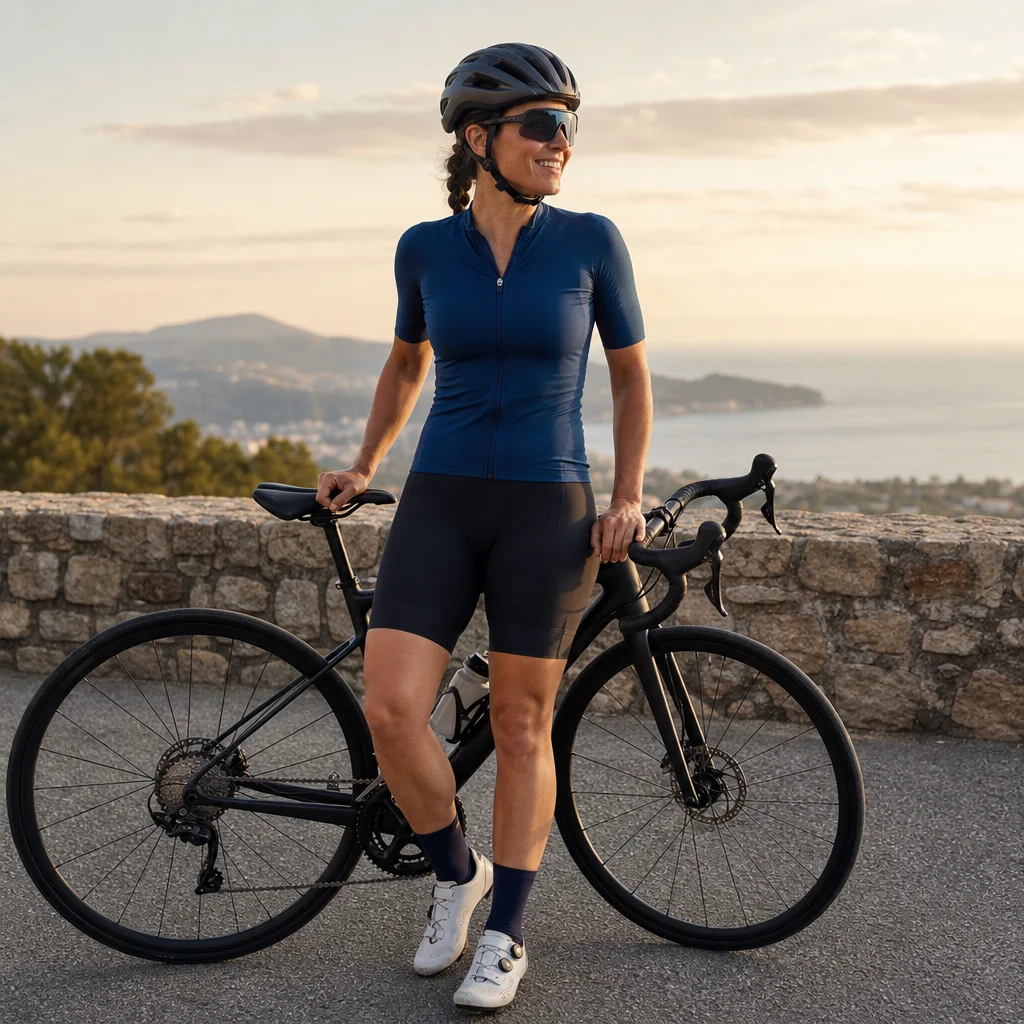
What road-cycling socks actually change
Road-cycling socks can look like a minor style choice, but their height and materials influence several practical details: how warm your lower legs feel, how well sweat moves away from your skin, how your shoes fit, and how easily the socks stay in place.
The right choice depends less on a universal “best” sock than on the conditions you ride in and the problems you’re trying to solve. A tall, thin synthetic sock may suit a warm summer ride, while a shorter merino-blend sock with modest cushioning may be more useful for cool-weather training. Neither choice is automatically better.
Think of socks as part of the connection between your feet, shoes, and the rest of your clothing. Height affects coverage and temperature. Material affects moisture and durability. Cushioning affects pressure and shoe volume. Fit determines whether those features work without bunching, sliding, or creating hot spots.
Sock height: coverage, temperature, and compatibility
Low-cut socks
Low-cut socks sit below or around the ankle. They can feel unobtrusive and may work well if you prefer minimal coverage, but they offer less protection from sun, road spray, insects, and contact with the shoe collar.
They can also be a poor match for some cycling shoes. If the shoe’s upper or ankle opening rubs against exposed skin, a low sock may leave you with irritation that a slightly taller sock would prevent.
Low socks are most useful when:
- You want minimal coverage in hot weather.
- Your shoes have a comfortable, low-profile opening.
- You’re riding short distances or prioritizing a barely-there feel.
Their main trade-off is that reducing fabric doesn’t necessarily make your feet much cooler. The shoe itself usually has a greater effect on airflow and heat than the small section of sock above it.
Ankle and quarter socks
Ankle or quarter-length socks provide a small amount of extra coverage without extending far up the calf. They’re a sensible middle ground for riders who dislike tall socks but want to reduce rubbing around the shoe opening.
This height is often easy to combine with different kinds of riding clothing. It works for casual rides, indoor training, and warm-weather road cycling without making the sock a prominent part of your outfit.
Crew-length socks
Crew-length cycling socks usually extend several inches above the ankle. They provide more coverage, tend to stay in place well, and give you room for a supportive cuff without depending on a tight band around the ankle.
The extra material can help with:
- Sun protection on exposed lower legs.
- Protection from light road debris and vegetation.
- Keeping the lower leg warmer in cool conditions.
- Creating a consistent appearance with cycling jerseys and bib shorts.
The drawback is that taller socks can feel warmer, especially if the fabric is thick or the cuff is tight. In hot weather, a tall sock made from a dense material may hold more heat than a thin, ventilated sock of the same height.
Height also needs to work with your other clothing. A sock cuff should sit flat beneath or beside leg warmers and shouldn't create a compressed ridge under tight bib-short hems. If you use ankle braces or other support, check that the sock doesn't bunch beneath them.
Tall socks and fashion-led choices
Tall socks can be comfortable and practical, but extra height alone doesn't improve performance. A longer cuff doesn’t automatically provide better support, cooling, or speed. Its value comes from coverage, a stable fit, and compatibility with your clothing and shoes.
Choose height based on the ride rather than assuming the most visible option is the most functional one. If a tall sock makes your legs feel hot or leaves a pressure mark, its appearance isn’t compensating for the poor fit.
Material: how different fibers behave
Synthetic fibers
Polyester, nylon, polypropylene, and elastane are common in cycling socks. They’re often blended rather than used alone, because each fiber contributes a different property.
Synthetic fabrics can offer effective moisture movement, quick drying, low weight, and good durability. They’re especially practical for riders who wash socks frequently or need them to dry between rides. A small amount of elastane helps the sock stretch and recover without sliding down.
Synthetic socks vary widely, though. A thin, open-knit polyester sock may feel airy, while a dense polyester blend can feel warm and hold moisture against the skin. The fiber name tells you something, but the knit structure and fabric thickness matter just as much.
Merino wool
Merino wool is valued for its ability to manage moisture and temperature across a wider range of conditions. It can feel comfortable in cool weather and may remain more pleasant than some synthetics when worn for a long time.
Merino isn't automatically warmer, thicker, or more durable than synthetic fabric. Lightweight merino can work in mild or warm conditions, while heavier versions are better suited to cold rides. It may also require more careful washing and can wear faster if the construction is thin or the fit is poor.
A merino blend often balances comfort with durability. Synthetic fibers can strengthen high-wear areas and improve stretch recovery, while merino contributes its familiar feel and temperature versatility.
Blended fabrics
Blends are usually the most flexible choice for general road riding. A sock might combine synthetic fibers, wool, and elastane to balance drying speed, comfort, resilience, and fit.
Look at the complete construction instead of treating the fiber percentage as a scorecard. A well-designed blend with a smooth toe seam and reinforced heel may serve you better than a sock made from a premium fiber but poorly shaped for your foot.
Cotton
Cotton can feel soft and familiar, but it absorbs moisture and dries slowly compared with many cycling-specific options. That may be acceptable for a short, easy ride in mild weather, but damp cotton can contribute to cold feet, friction, and discomfort over longer distances.
Cotton isn’t dangerous by itself; it’s simply less forgiving when conditions change or your feet sweat heavily. For regular road rides, a synthetic or blended sock is usually easier to manage.
Cushioning: comfort without crowding your shoes
Cushioning is often placed under the heel, forefoot, or both. It can soften pressure from the shoe and reduce the harsh feel of rough roads, but more cushioning isn’t always more comfortable.
A thick sock takes up space inside the shoe. If your shoes already fit closely, extra material can compress your toes, reduce circulation, or create pressure across the top of your foot. It can also change how firmly your foot is held during hard pedaling.
Thin socks suit riders who prefer a close shoe fit or use shoes with limited internal volume. Medium cushioning is a versatile choice for many road rides. Heavier cushioning may be useful in cooler conditions or with shoes designed to accommodate it, but it shouldn't be used to solve a shoe that is fundamentally too large or too small.
Pay attention to where the cushioning sits. A padded heel won’t help much if your discomfort is under the ball of your foot, and a thick forefoot may make a tight toe box worse. Match the sock’s padding to the pressure you actually feel.
Ventilation and moisture management
Ventilation comes from the knit pattern, fabric weight, and shoe design. Mesh panels over the top of the foot can improve airflow, while a denser sole can provide durability and modest insulation.
The most breathable sock isn't always the best choice. Open mesh may feel excellent on a hot, dry ride but offer little protection during a cool descent or wet stretch. Conversely, a dense sock may manage cool temperatures well but feel clammy when paired with a highly enclosed shoe.
If your feet sweat heavily, start with a lightweight synthetic or synthetic-rich blend and a ventilated shoe. If your feet get cold easily, consider a slightly denser knit before jumping to a much thicker sock. A thicker sock can make the shoe fit too tight, which may worsen cold-feet problems by restricting circulation.
Fit: the feature that makes everything else work
A cycling sock should lie flat against your foot and lower leg. The heel should stay in its pocket, the toe shouldn't press against the end of the shoe, and the cuff should remain in position without digging into your skin.
Check the following when trying on socks:
- The toe seam shouldn't sit directly across a pressure point.
- The heel shouldn't pull forward when you flex your ankle.
- The fabric shouldn't wrinkle beneath the arch or ball of the foot.
- The cuff should hold without leaving a deep mark.
- The sock should fit inside the shoe without making the shoe feel tighter.
Socks that are too large can bunch and rub. Socks that are too small can stretch thin across the toes and pull the heel out of position. If you’re between sizes, compare the brand’s sizing chart and consider the shoe you’ll wear them with rather than choosing solely by your usual clothing size.
Check the shoe-and-sock combination: Before a long ride, wear the socks with your cycling shoes for at least several minutes and check for toe pressure, wrinkles, and cuff marks. The same sock can feel fine in one pair of shoes and too thick in another.
Choosing by riding conditions
For hot-weather riding, look for a lightweight construction, moisture-managing fibers, and ventilation. Height is a personal choice, but a tall sock needn't feel hot if it’s thin and breathable.
For cool weather, choose a denser knit or a merino blend, then confirm that your shoes still have enough room. Adding a thicker sock to a close-fitting shoe can create more problems than it solves.
For wet conditions, no ordinary sock will keep your feet completely dry if water enters through the shoe. Prioritize a comfortable fit and pair the socks with appropriate shoe covers or weather-resistant footwear when needed. Avoid assuming that a water-resistant fiber makes the entire foot system waterproof.
For long rides, favor socks that stay dry enough, remain in place, and don’t create pressure points. Moderate cushioning and a smooth toe area may matter more than the smallest possible weight.
A simple way to decide
Start with the problem you’re experiencing:
- Rubbing at the shoe opening: try a slightly taller sock.
- Hot feet: try a thinner knit or more ventilated material before reducing height.
- Cold feet: try a denser or wool-blend sock, but check shoe volume first.
- Toe pressure: choose less cushioning or reassess the shoe fit.
- Damp, uncomfortable feet: try a synthetic-rich or lightweight wool blend and improve shoe ventilation.
- Socks sliding down: check the size and cuff recovery rather than automatically choosing a taller design.
You don’t need a large collection. Two or three weights or constructions can cover most recreational riding: a lightweight warm-weather pair, a general-purpose pair, and a warmer option if you ride through cooler seasons.
Practical next steps
Choose sock height for coverage and compatibility, not simply appearance. Choose material based on moisture, temperature, drying needs, and durability. Treat cushioning as a fit variable, because a thicker sock changes the space inside your shoe.
When in doubt, begin with a medium-height, lightweight-to-moderate synthetic blend that fits smoothly. Then adjust one feature at a time—height, material, or cushioning—so you can tell what actually improves your ride.