How to Plan a Safe Nighttime Return From a Day Ride
I’ll compare the lighting, route, clothing, battery, and communication choices that matter when a daytime ride may finish after dark, so you can choose a safer nighttime return without carrying more than you need.
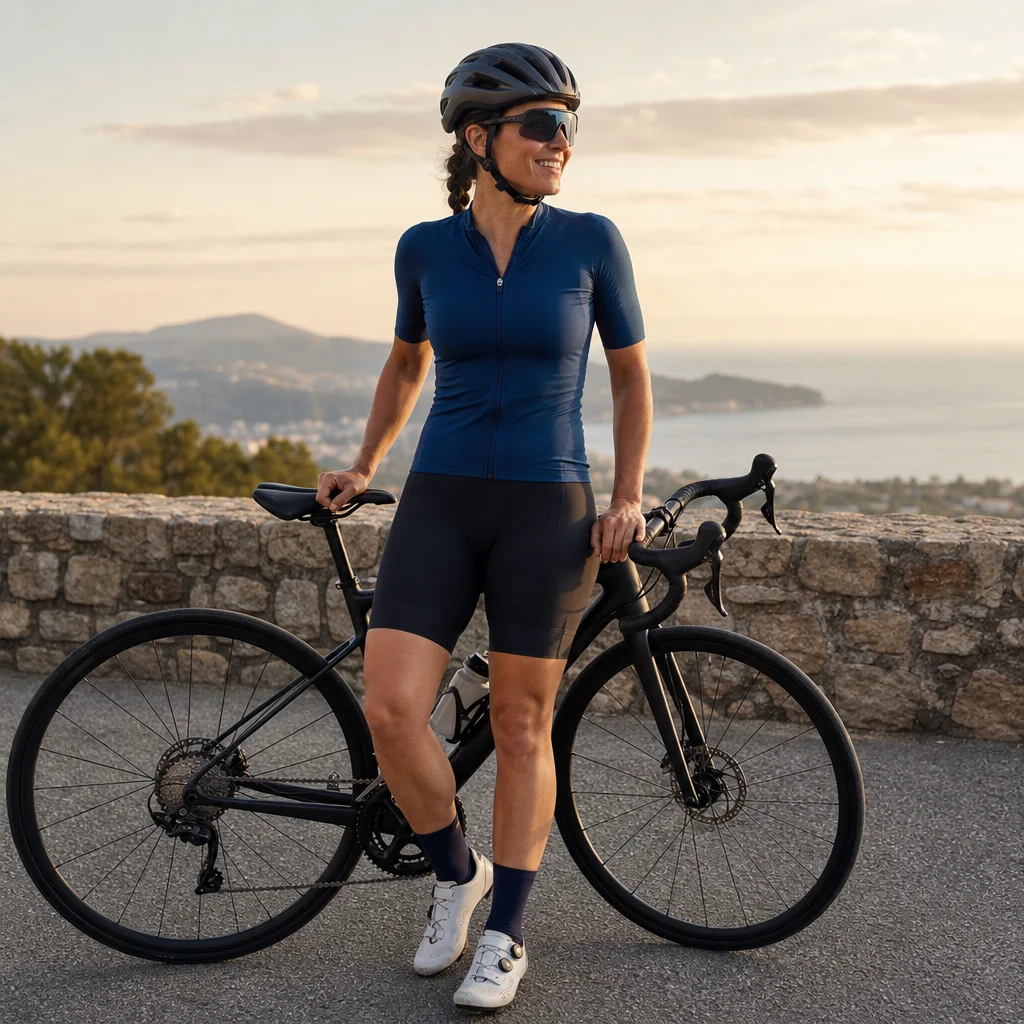
A day ride can run late for ordinary reasons: a mechanical problem, a slower pace, a long café stop, or a route that takes more time than expected. If you’ve planned only for daylight, the final miles can become the most stressful part of the trip.
A safe nighttime return starts before you leave. You need enough light to see and be seen, a route that remains sensible after dark, clothing suited to falling temperatures, and a backup plan if your equipment or energy runs short. The goal isn’t to predict every problem. It’s to make the likely problems manageable.
Decide how much night riding your plan allows
First, estimate when you’ll actually be home—not merely when you expect to turn around. Include stops, hills, navigation errors, punctures, and the possibility that your group’s pace will drop late in the ride.
If your route could extend beyond sunset, treat nighttime riding as part of the plan from the start. Don’t wait until the sky is dim to decide whether your equipment is adequate.
There’s a useful distinction between these situations:
- A short, familiar finish after sunset: You may need a basic front light, rear light, reflective details, and a route with low traffic.
- Several miles of darkness on open roads: You’ll want stronger, longer-lasting lighting, more deliberate route selection, and a way to manage batteries.
- An uncertain or remote return: You need redundancy, reliable communication, and realistic bailout options such as a train station, taxi pickup, or a ride from someone you trust.
If the ride is likely to become a long night outing, changing the route or turning around earlier may be safer than trying to make daytime equipment cover an after-dark journey.
Build a lighting setup with a reserve
Your lighting has two jobs: helping you see the road and helping other road users notice you. A small blinking light may help with visibility, but it shouldn’t be your only front light on an unlit road.
For the front, choose a light appropriate to the route. On streets with regular lighting, a visibility-focused light may be sufficient for seeing surface hazards. On dark bike paths or rural roads, you need a beam that illuminates the pavement far enough ahead to identify turns, debris, and changes in surface.
Aim the beam so it lights your path without shining directly into approaching riders’ or drivers’ eyes. A very bright light pointed too high can make you more conspicuous while making you less considerate—and potentially less useful to everyone approaching you.
Use a steady or flashing rear light that can be seen from a reasonable distance. Adding reflective material to your clothing, bag, helmet, or bike helps when illuminated by headlights, but reflectors don’t replace an active rear light.
Check runtime, not just brightness
Light manufacturers commonly list multiple runtime levels. The longest advertised runtime may apply to a low setting that isn’t suitable for your route, while a brighter setting may use the battery much faster.
Before leaving, check the expected runtime at the mode you intend to use. Then compare it with the time you could spend in darkness, adding a reserve for delays. Cold temperatures can also reduce available battery performance, especially when a battery is already near empty.
A practical setup might include:
- A primary front light with enough capacity for the planned dark section.
- A separate rear light with similar reserve.
- A small backup front or rear light, preferably charged and easy to mount.
- A charging cable or compact power bank when your lights support charging during a stop.
- A secure mount that won’t rotate or fall off over rough pavement.
A backup light is useful only if you can reach it quickly. Keep it in a jersey pocket, saddlebag, or handlebar bag rather than buried beneath tools and food.
Check the local nighttime rules: Before the ride, confirm the bicycle-lighting and reflector requirements for every state or local jurisdiction on your route. Requirements vary across the United States, and some roads or trails may have additional restrictions. Treat legal equipment as the minimum, not the complete safety plan.
Choose a route that becomes easier after dark
The fastest daytime route isn’t always the safest nighttime route. After sunset, traffic speed, sight distance, road surface, intersections, and access to help matter more.
Prefer roads and paths that offer:
- Lower traffic volume and fewer high-speed intersections.
- Adequate shoulder or lane width where permitted and appropriate.
- Smooth pavement with fewer drainage grates, potholes, and debris.
- Familiar turns that don’t depend entirely on reading a phone screen.
- Reliable cellular coverage or nearby homes and businesses.
- Several places where you could stop, call for help, or leave the route.
Be cautious with trails. Some are closed after dark, and others may have gates, limited lighting, uneven surfaces, or rules against bicycles at certain hours. A route that looks available on a map may not be legally or practically usable at night.
Download the route or save it for offline use before leaving. Keep navigation instructions simple enough to follow without staring at the screen. If you use a handlebar-mounted device, set it up before the light fades and stop somewhere safe when you need to make a significant change.
Prepare for falling temperatures
The temperature at sunset may be comfortable, while the return feels noticeably colder. Your speed, wind exposure, damp clothing, and reduced activity during stops can all make the final miles uncomfortable.
Carry a lightweight layer that packs small. A windproof shell is often useful because it limits wind chill without requiring a bulky jacket. Arm warmers, knee warmers, full-finger gloves, and a cap or ear covering can make a bigger difference than their size suggests.
Pack for the conditions you’ll encounter, not just the forecast at departure. A weather forecast can change, and a clear evening can still bring damp roads or reduced visibility. If rain is possible, protect your phone, spare layers, and critical electronics in a waterproof bag or liner.
Bright clothing can help with daytime visibility, but reflective elements are especially useful at night because they return light from vehicle headlights. Place them where they move or present a clear outline—such as ankles, wrists, or the back of a jacket—while still wearing comfortable, weather-appropriate clothing.
Plan communication and a bailout
Tell someone where you’re going, when you expect to return, and what to do if you stop checking in. A route link or shared location can be more useful than a general message such as “I’m riding for a few hours.”
Your phone should be charged before departure, with enough capacity reserved for navigation and an emergency call. Keep it protected from sweat and rain. If the route is remote, consider whether your carrier has coverage throughout the ride; a phone that works at home may not work along every rural road.
A bailout plan should answer practical questions:
- Where can you safely stop if the weather worsens?
- Which nearby locations are reachable without crossing a dangerous road?
- Can someone pick you up, and can your bike fit in their vehicle?
- Are local transit services open at the time you may need them?
- What will you do if your phone, lights, or payment method fails?
Check current operating hours, bicycle policies, and service availability when your plan depends on a business, transit system, or ride service. Hours and rules can change, particularly on weekends and holidays.
Make the bike ready for the return
Inspect the basics before a long ride: tire condition and pressure, brakes, chain, wheels, and the mounting points for your lights. A loose light mount becomes more troublesome when you’re trying to fix it in darkness.
Carry the tools and supplies that match your bike and your ability to use them. At a minimum, that may mean a spare tube or tubeless repair supplies, pump or inflator, tire levers, a multitool, and a small amount of identification and payment. If you can’t complete a repair confidently, your bailout plan matters even more.
Keep lights and bags clear of cables, brake parts, and moving wheels. After mounting everything, turn the handlebars and check that nothing pulls or interferes with steering. If you use a rechargeable light, confirm that it actually starts and that its indicator is showing a useful charge—not merely that it was plugged in.
Adjust your riding once darkness arrives
Reduce speed enough to match what your light lets you see. A light that reveals only a short section of pavement doesn’t support the same pace as daylight. Scan farther ahead, but also watch for the near-field hazards that appear quickly when the beam moves over the road.
Increase your following distance and approach intersections defensively. Drivers may misjudge your speed or fail to see you, even when your lights are operating. Avoid weaving between lanes to improve visibility, and use established traffic signals and lane practices that apply to your location.
If you’re riding with others, agree on a regrouping plan before dark. Leave enough space for each rider’s light to remain useful, and avoid placing a powerful rear light directly in another rider’s eyes. A group should also decide what happens if someone has a mechanical problem or runs out of battery.
Use a simple pre-ride checklist
Before setting out, confirm:
- Your estimated arrival time includes realistic stops and delays.
- Front and rear lights are charged for the intended dark period, with reserve.
- A backup light is accessible and working.
- The route remains open and reasonable after sunset.
- You have a warm layer and weather protection.
- Your phone is charged, protected, and loaded with the route.
- Someone knows your plan and likely return time.
- You have tools, identification, payment, and a clear bailout option.
If several answers are uncertain, shorten the route, start earlier, choose a more sheltered course, or arrange a pickup point before you leave. A pleasant daytime ride is worth protecting—but not by turning an avoidable nighttime problem into an emergency.