How to Choose a Route That Matches Your Current Fitness
A route that looks manageable on a map can become demanding when hills, traffic, heat, or limited escape points add up. I’ll show you how to weigh those factors against your current fitness and choose a ride you can finish confidently.
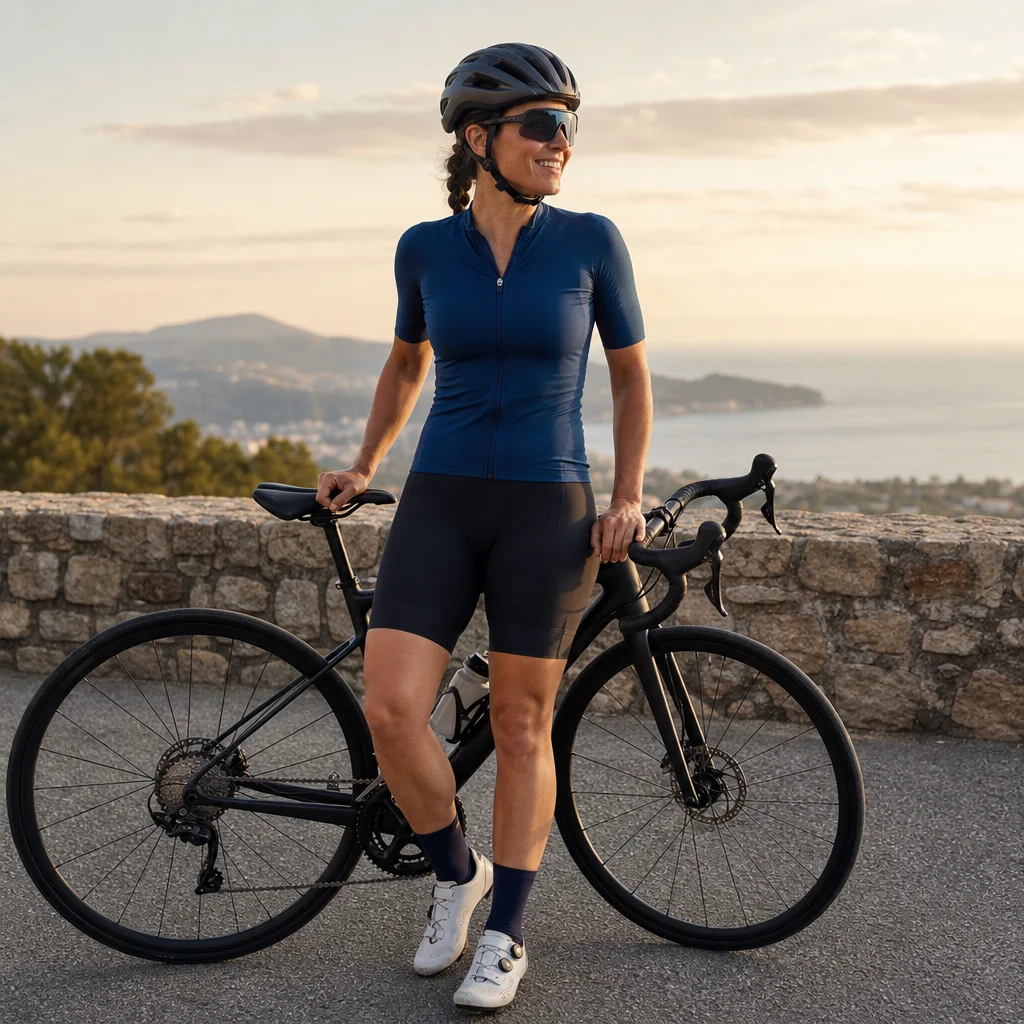
Your usual distance may feel very different when a route adds sustained climbing, rough pavement, busy roads, or several miles without an easy way home. Choosing well means looking beyond the headline mileage and judging the whole ride as a system of physical and practical demands.
The goal isn’t to make every ride easy. It’s to choose a challenge that leaves room for normal fatigue, changing conditions, and the occasional wrong turn without turning a recreational ride into a rescue problem.
Start with the effort you can repeat
Use your recent rides—not your best-ever ride—as the baseline. Think about the longest distance you’ve completed comfortably in the past few weeks, how much climbing it included, and how you felt during the final third.
A route is probably close to your current level when you can finish with steady effort, eat and drink normally, and still handle traffic and road decisions. If you’re exhausted before the end, struggling to maintain control, or needing a long recovery afterward, the route was probably too demanding for a routine ride.
A useful starting point is to change only one major difficulty at a time:
- Add distance while keeping the route relatively flat.
- Add climbing while keeping the distance and surface familiar.
- Try busier roads only after you’re comfortable with the physical demands.
- Test gravel or rough pavement on a shorter ride before combining it with hills.
This approach makes it easier to identify what challenged you. Adding distance, elevation, traffic, heat, and unfamiliar surfaces all at once makes the result harder to predict.
Evaluate more than the mileage
Distance and time
Distance gives you a rough idea of how long you’ll be riding, but time is often the better planning measure. A 25-mile route with several climbs, stop signs, and rough sections can take much longer than a flat 25-mile route.
Estimate moving time conservatively, then add time for intersections, food, mechanical checks, navigation, and unexpected delays. If your typical pace is 13 miles per hour, a 30-mile ride won’t necessarily take a little over two hours from door to door. A hilly route may take longer, and a beginner-friendly plan should leave a margin rather than depend on an ideal pace.
For an early ride at a new distance, choose a route that lets you return before you’re depleted. You can always extend it with an additional loop or out-and-back section if you’re feeling strong.
Elevation and hill length
Total elevation gain matters, but its distribution matters too. Several short hills may be manageable because you get frequent recovery. One long climb can be more difficult, especially if you haven’t practiced sustained effort.
Look at:
- The steepest sections, not just total elevation.
- Whether climbing comes early or late in the route.
- The length of each climb.
- Whether there’s a safe place to stop or turn around.
- How much descending follows the climb.
A route with 1,500 feet of gradual climbing may suit you better than a route with 900 feet concentrated in two steep hills. Map elevation profiles can be imperfect, so treat them as planning aids rather than precise predictions.
If you’re unsure, choose a loop with a short, familiar climb near the beginning. That gives you useful information about the day without committing you to a distant high point.
Surface and road quality
Pavement quality affects both effort and control. Rough asphalt, patched shoulders, potholes, loose gravel, and poorly maintained bike paths can slow you down and increase fatigue in your hands, back, and legs.
Unpaved sections deserve special attention. A road bike with narrow tires may handle a short, firm gravel segment, but deep loose gravel, sand, mud, and washboard surfaces can make steering unpredictable. Your tires, tire pressure, bike clearance, and handling experience all matter.
When a route combines a new surface with significant climbing, distance, or traffic, reduce another variable. A short mixed-surface route is a better first test than a long remote ride.
Treat traffic as part of the route’s difficulty
A physically easy route can still be a poor match if it requires riding on roads where traffic is fast, sight lines are limited, or shoulders disappear without warning. Traffic adds mental work, and that work becomes harder when you’re tired.
Assess the route for:
- Speed and volume of motor traffic.
- Shoulder width and continuity.
- Narrow bridges, blind curves, and sudden merges.
- Complex intersections or frequent turning movements.
- Places where you can safely pull off the road.
- Whether the route is more exposed during commute or event hours.
A quiet road isn’t automatically safe, and a bike lane isn’t automatically comfortable for every rider. Consider how confidently you can scan, signal, communicate, and control your bike on that particular road.
For newer riders, a slightly longer route on calmer streets may be a better fitness choice than a shorter route on a high-speed arterial. The extra miles can be easier than the extra stress.
Check today’s riding conditions: Before you leave, verify weather, road or trail closures, construction, flood or storm hazards, and any current access rules for paths or roads on your route. Conditions and local requirements can change, so use current official or local sources rather than relying only on an old route file.
Plan bailout points before you need them
A bailout point is a place where you can shorten the ride, get help, or return by a simpler route. Useful options include a train station where bikes are permitted, a public transit connection, a bike shop, a staffed convenience store, a park entrance, a familiar cross street, or a route that leads directly home.
Not every option will be available in every location or at every hour. Check access and bicycle policies before depending on public transportation, and don’t assume a business will be open or able to help with a mechanical problem.
Mark bailout points at several stages, particularly:
- Before the first major climb.
- Near the halfway point.
- After the most remote section.
- Before a long exposed stretch.
- Near the final part of the ride, when fatigue is most likely.
An out-and-back route is often easier to manage because you already know the road home. A loop can offer variety, but make sure the far side doesn’t contain the hardest climb, busiest road, or fewest escape options.
Account for weather exposure
Weather changes the difficulty of a route even when the forecast looks acceptable. Heat, humidity, strong wind, cold, rain, and direct sun can each affect your pace and judgment.
Wind deserves special attention on open roads. A route with a strong tailwind in the first half may feel unusually easy, followed by a difficult return into a headwind. If the route is exposed, plan based on the harder direction rather than the favorable one.
For hot or sunny conditions, look for water stops, shade, and shorter ways home. For cold or wet conditions, consider how long you’ll be exposed if you slow down or have a mechanical problem. Mountain and coastal weather can shift quickly, so a route that is sensible in the morning may not remain comfortable later.
When conditions are uncertain, shorten the route and stay closer to familiar roads. The fitness benefit of a ride rarely justifies being committed to a remote section in deteriorating weather.
Use a simple route-rating method
Before choosing between several routes, rate each one from low to high for the main demands:
| Factor | Lower demand | Higher demand |
|---|---|---|
| Distance | Familiar length | Noticeably longer than recent rides |
| Elevation | Mostly flat or gentle | Long or steep climbs |
| Surface | Smooth, familiar pavement | Rough, loose, or mixed surfaces |
| Traffic | Quiet, predictable roads | Fast traffic or complex intersections |
| Escape options | Frequent ways home | Long remote sections |
| Weather exposure | Shade and shelter available | Open, hot, cold, or windy terrain |
If every category is on the high side, choose a different route. If only one category is challenging, the ride may be a reasonable progression. If two are challenging, reduce distance or add more bailout options. This isn’t a scientific score; it’s a way to notice when several modest concerns are accumulating.
Make the route easier without abandoning the goal
You can often keep the same destination while reducing risk and fatigue:
- Start from a closer parking area or transit-accessible point.
- Remove the most remote section.
- Reverse the direction to place a climb earlier, while you’re fresher.
- Replace a busy road with a quieter parallel street.
- Use a shorter loop near home instead of a single long loop.
- Plan a food or water stop before the route’s hardest section.
- Ride with someone familiar with the area.
Be cautious about placing every climb at the end just because the route looks efficient on a map. Finishing with a manageable challenge can be satisfying; finishing with an unavoidable steep climb after your supplies or energy are low is a different calculation.
A quick decision checklist
Before committing, ask:
- Is the distance close enough to a recent comfortable ride?
- Can you describe the longest and steepest climbs?
- Do the surface and traffic match your handling experience?
- Where can you stop, shorten the ride, or get assistance?
- Do you have enough food, water, clothing, and battery for the expected time?
- What will the weather and wind feel like on the most exposed section?
- What is your simpler backup route if you’re tired or conditions change?
If you can answer these questions clearly, you’re making a route choice based on more than optimism. Start with the conservative option, pay attention to how the final third feels, and use that information to adjust your next ride. A well-matched route should challenge your fitness while leaving enough attention and energy for safe decisions all the way home.