Road Bike Basics for Riders Coming From Indoor Spin Classes
I’ll clarify which indoor-cycling skills transfer to the road, which need retraining, and how to prepare for balance, braking, shifting, wind, traffic, and rough pavement without treating your first outdoor rides like spin class.
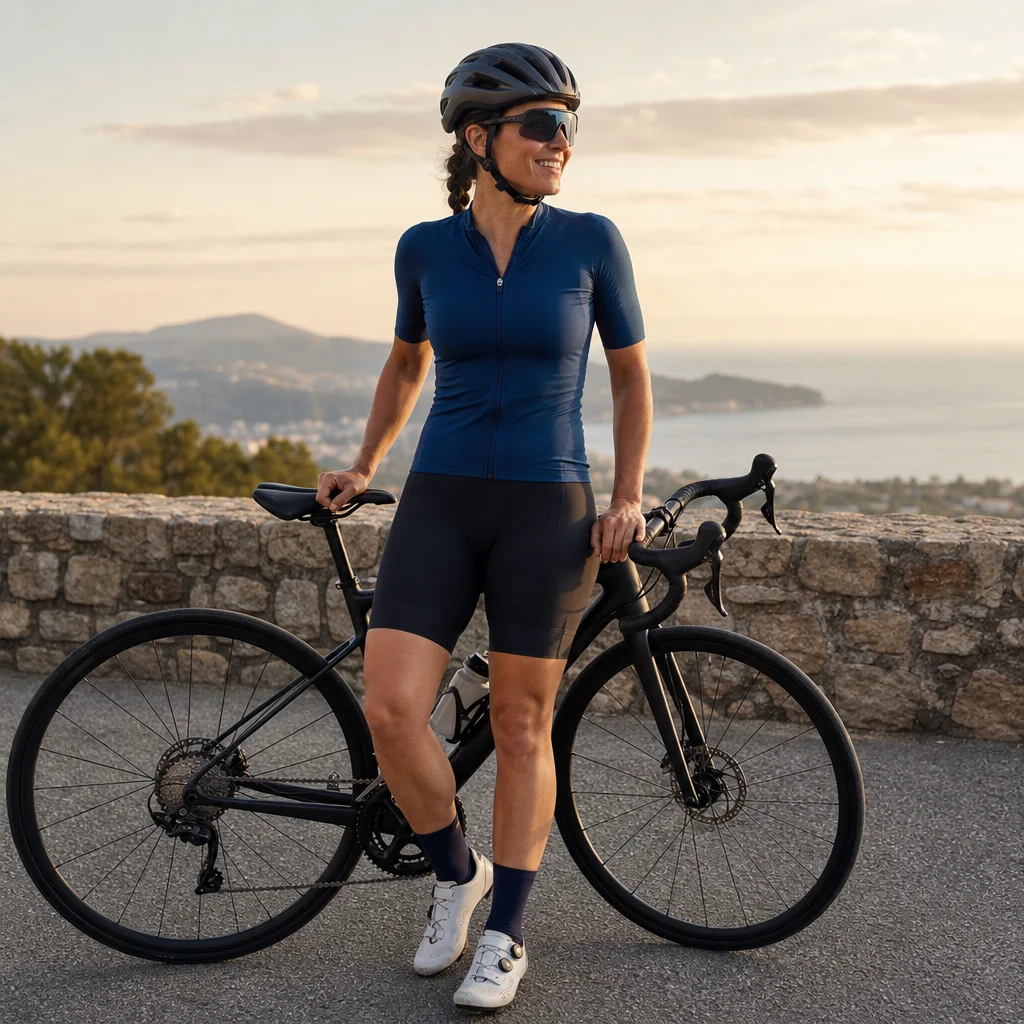
Indoor spin classes can build useful fitness, but they remove many of the decisions that make outdoor cycling demanding. The bike stays upright, resistance changes are controlled, and the instructor or music sets the rhythm. On the road, you must manage balance, steering, braking, gears, traffic, weather, and changing surfaces at the same time.
That doesn’t mean your indoor fitness is wasted. It means your first outdoor rides should focus less on proving how hard you can pedal and more on learning how to control the bike.
What transfers from indoor cycling—and what doesn’t
Indoor classes usually give you several advantages:
- A basic sense of cadence and effort
- Familiarity with riding for a sustained period
- Some tolerance for discomfort and fatigue
- An understanding of how resistance affects your pedalling
- The motivation to follow a structured workout
Those skills can make the transition easier. However, an indoor bike is fixed in place, and that changes almost everything about handling.
Outside, the bike leans when you turn. Your hands help steer rather than simply rest on the handlebars. You need to look ahead, hold a line, avoid hazards, and make small corrections without overreacting. You also have to slow down before a corner, choose an appropriate gear, and communicate with other road users.
Your first goal isn't to reproduce a difficult class outdoors. It’s to become predictable and comfortable.
Start with bike fit and controls
A road bike may feel more delicate than a spin bike because it’s lighter, narrower, and more responsive. That responsiveness is useful once you’re accustomed to it, but an unfamiliar position can make your hands, neck, and lower back tense.
Before riding far, check these basics:
- You can reach both brake levers comfortably.
- Your saddle height lets your knee remain slightly bent at the bottom of the pedal stroke.
- You can stand over the bike or otherwise handle it confidently when stopped.
- The handlebars don’t feel excessively low or far away.
- Your shoes, pedals, and cleats release reliably if you use clipless pedals.
Road-bike controls vary. On many drop-bar bikes, the brake levers also control the gears, but the exact shifting action depends on the groupset. Learn which lever moves the chain toward a larger or smaller cog before you ride in traffic.
Practise while stationary only for identifying the controls. For actual shifting and braking practice, use a quiet, open area where you can keep moving safely.
Braking is a skill, not a panic response
Indoor bikes don’t prepare you for the timing and force required to stop a moving bicycle outdoors. You’ll need to brake for intersections, pedestrians, parked vehicles, tight corners, steep descents, and unexpected obstacles.
Use both brakes smoothly. The front brake generally provides more stopping power because braking shifts your weight forward, but grabbing it abruptly can unsettle the bike. The rear brake can help manage speed, though relying on it alone may produce a longer stop or a skidding rear wheel.
Practise this sequence in a clear area:
- Look ahead and choose a stopping point.
- Move your hands to a secure position on the bars.
- Apply both brakes progressively.
- Keep the bike travelling in a straight line.
- Release or reduce braking as needed before turning.
Avoid braking hard while cornering unless you need to respond to an immediate hazard. Slow before the turn, then steer through it with a relaxed grip and eyes directed toward the exit.
A common spin-class habit is to treat resistance as the main way to control effort. Outdoors, speed management often comes from coasting and braking, not just pushing a heavier gear.
Check your stopping setup: Before your first traffic ride, confirm that your brakes engage firmly, the pads or rotors are in good condition, and you know which controls operate them. Local cycling rules and helmet requirements can vary, so check current guidance for the places where you’ll ride.
Learn to shift before your legs are overloaded
On a spin bike, you can turn a resistance knob or follow a programmed interval without worrying about a sudden hill or a poorly timed gear. On a road bike, shifting early helps you preserve momentum and avoid grinding.
Use an easier gear before a hill becomes steep. If you wait until your cadence collapses, shifting may feel awkward and your legs may already be overloaded. When approaching a descent or a fast section, shift to a harder gear if you’re spinning out, but don’t chase a high gear simply because it feels more athletic.
Think of your gears as tools for maintaining a manageable cadence. You don’t need to match the cadence from class. You need a gear that lets you pedal smoothly while leaving enough attention for steering and your surroundings.
Practise shifting in a straight line and with light pedal pressure. Avoid making several large gear changes while turning, braking, or navigating an intersection.
Handle balance, wind, and uneven pavement
A stationary spin bike hides the constant balance corrections required outdoors. At first, you may grip the bars too tightly and steer with your shoulders. That can make the bike feel twitchy and can cause hand, neck, or upper-back fatigue.
Keep your elbows slightly bent, relax your shoulders, and support your upper body without locking your arms. Look several metres ahead rather than directly at the front wheel. Your bike tends to follow your gaze, so staring at a pothole can make it harder to avoid smoothly.
Uneven pavement deserves a different approach from a smooth studio floor:
- Scan ahead for potholes, cracks, drain grates, gravel, and debris.
- Reduce speed before the rough section.
- Keep the handlebars steady without trying to force the bike rigidly straight.
- Unweight the saddle slightly over larger bumps when appropriate.
- Avoid sudden swerves, especially around traffic.
Wind is another outdoor factor that indoor cycling can't simulate well. A crosswind can push you sideways, particularly near open fields, bridges, or large vehicles. Keep both hands ready for steering, maintain extra space, and reduce speed if the bike feels difficult to control. Passing vehicles can also create a brief change in airflow; don’t ride too close to them or assume the wind will remain constant.
Traffic changes the workout completely
A class encourages uninterrupted effort. A road ride may require you to stop, yield, change position, or abandon an interval because conditions have changed. That isn’t a failed workout. It’s normal riding.
For early rides, choose a familiar route with low traffic, good pavement, and frequent opportunities to stop. A short loop is often better than a long out-and-back because you can return to your starting point quickly if the bike, weather, or traffic feels overwhelming.
Practise these habits before attempting busy roads:
- Check behind you without allowing the bike to drift.
- Signal turns when appropriate and when you can do so without losing control.
- Ride predictably rather than weaving around every minor surface defect.
- Position yourself where you’re visible and have room to avoid hazards.
- Treat intersections as decision points, not places to maintain an interval.
The precise rules for lane position, signalling, lights, and riding on different roads depend on state and local law. Learn the rules that apply to your route, and remember that legal permission doesn’t remove the need to choose a lower-risk position or speed.
Clipless pedals are optional, not a rite of passage
Many indoor riders assume road cycling requires clipless pedals. It doesn’t. Flat pedals or secure toe cages can be a sensible way to learn outdoor handling without adding another task.
If you do use clipless pedals, practise clipping in and out repeatedly in a safe, low-speed area. Release one foot before you stop, and practise choosing the same side consistently. Expect a learning period; stopping while still attached is a common beginner error.
Don’t introduce clipless pedals, a new bike, a crowded route, and a long ride all at once. Change one variable at a time so you can identify what needs attention.
Build your first outdoor rides around skills
Your indoor fitness may tempt you to begin with a difficult distance. A better progression is to keep the first few rides short enough that you can remain mentally alert.
A useful sequence is:
- Control ride: Practise starting, stopping, steering, braking, and shifting in a quiet area.
- Easy route: Ride a short, low-traffic loop and focus on scanning, line control, and intersections.
- Moderate route: Add gentle hills and a little more distance while keeping the effort conversational.
- Structured training: Add intervals only after outdoor handling feels automatic enough to leave attention for your surroundings.
Leave more energy than you think you need. Fatigue can affect balance, judgement, braking, and your ability to notice hazards before it affects your heart rate.
Bring water, a charged phone, identification, a basic repair solution for a flat, and a way to get home if the bike can't be ridden. A spare tube, tyre levers, and a pump or inflator are useful only if you know how to use them; practise at home rather than waiting for the roadside.
The main adjustment: outdoor riding isn't continuous exercise
Spin classes reward consistency. Outdoor cycling rewards adaptability. You may pedal hard on a hill, coast through a turn, stop at a signal, ease off for rough pavement, and then resume without losing the value of the ride.
Measure early progress by control rather than speed: smoother stops, calmer cornering, earlier gear changes, better awareness, and fewer moments of panic. Your indoor conditioning will support the transition, but your outdoor confidence will come from repeated exposure to real riding decisions.
For your next step, choose a short route, inspect the bike, practise braking and shifting, and ride at an intensity that leaves attention available for the road. Once those fundamentals feel routine, the fitness you built indoors can become a strong foundation for longer and more enjoyable rides outside.