How to Ride Through a Crosswind Without Wandering Across the Lane
Hugging the edge can leave you with no room for a gust, while drifting toward traffic creates a different risk. I’ll explain how to relax your steering, read exposed roads, and choose a safer lane position when crosswinds start moving your bike.
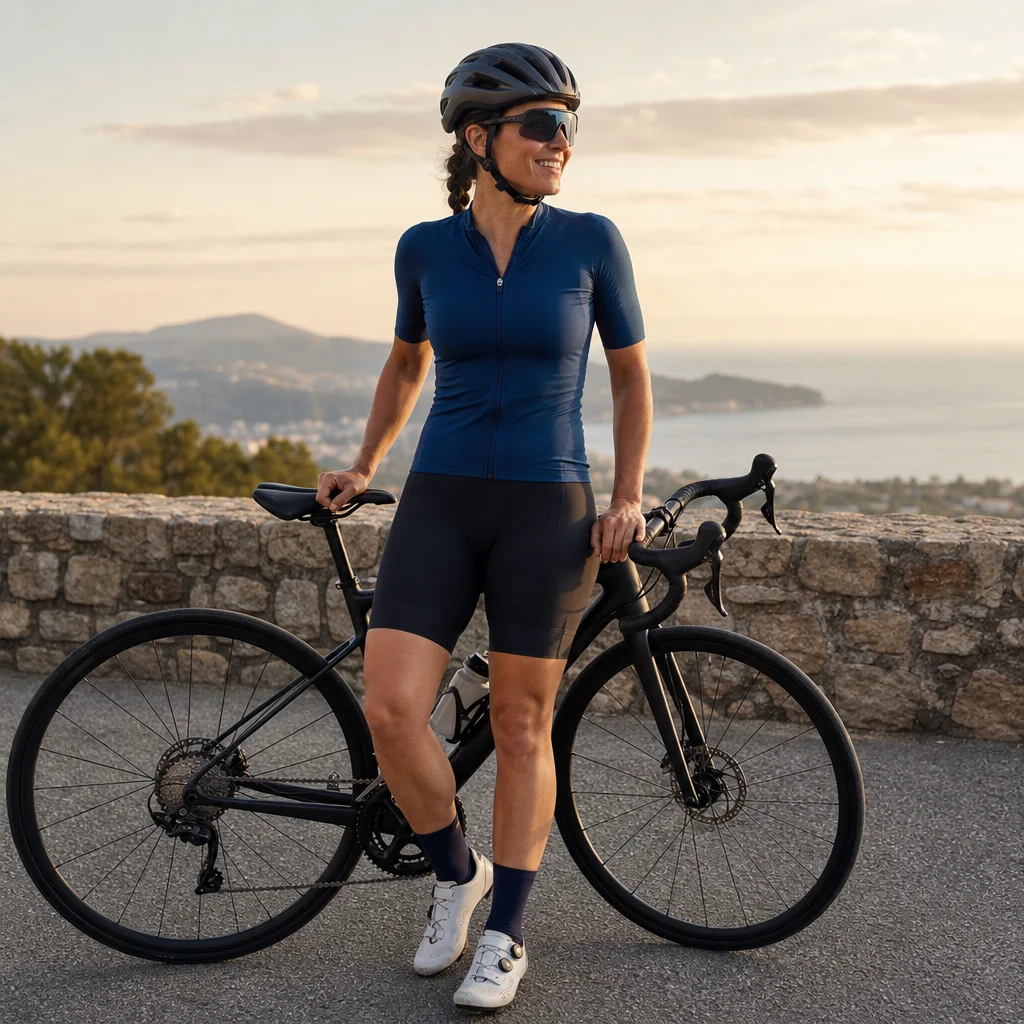
Crosswinds become difficult when you try to correct every movement with your hands. The bike may lean, the wind may change direction around hedges or vehicles, and your first instinct may be to steer sharply back toward the edge. That reaction often creates the wandering you’re trying to prevent.
A better approach is to give the bike room to move slightly while keeping your upper body relaxed, your steering input small, and your position on the road deliberate. The goal isn’t to hold a perfectly rigid line. It’s to stay predictable and leave yourself space for the next gust.
Understand what the wind is doing
A crosswind pushes you downwind. If the wind is coming from your left, it generally pushes you toward the right side of the road; if it’s coming from your right, it pushes you toward the left. You’ll usually need a small lean into the wind to balance that force.
The most noticeable movement often happens when the wind changes suddenly rather than when it blows steadily. Common triggers include:
- Exiting a sheltered section of trees or buildings
- Passing an opening in a hedge or sound barrier
- Riding beside a large truck or bus
- Entering or leaving a bridge
- Cresting a rise on an otherwise exposed road
- Meeting a strong gust at an angle
Wind can also create a useful warning before the bike moves. Listen for a change in sound, watch vegetation on both sides of the road, and notice whether flags, grass, or dust indicate a shifting direction. These clues won’t predict every gust, but they can help you avoid being surprised.
Relax your steering before you change your line
A crosswind encourages a tight grip. A tight grip makes the handlebars more sensitive because your arms begin making large, quick corrections. Those corrections can turn a small gust into a series of wobbles.
Keep your hands secure but avoid squeezing the bars as if you’re trying to stop them moving. Bend your elbows slightly and let your shoulders drop. Your upper body should absorb some movement without transmitting every twitch to the front wheel.
Keep your eyes several metres ahead rather than staring at the road immediately in front of your wheel. Looking close makes each small deviation feel urgent. Looking farther ahead helps you make smoother, earlier corrections.
Your hands should remain in a position that gives you reliable control. On exposed roads, the hoods are often a useful compromise because they allow light steering and quick access to the brake levers. If you’re comfortable in the drops, they can provide a lower, more secure position, but don’t move there for the first time when a strong gust is already affecting you.
Let the bike lean; don’t wrestle it upright
The bike needs to lean slightly into the wind to stay on course. You don’t need to keep it perfectly vertical. Trying to hold the bike upright while the wind pushes from the side can lead to constant steering corrections.
Keep your torso relatively calm and let the bike move beneath you. A small lean is different from allowing the whole bicycle to drift across the lane. Your hands still guide the front wheel, but the guidance should be gentle and continuous rather than a series of sharp turns.
Avoid deliberately leaning hard into an unpredictable gust. Wind strength can change quickly, and an aggressive correction may leave you leaning the wrong way when the gust stops. Make the smallest adjustment that keeps your intended line, then stay ready for the next change.
Choose a lane position with space to recover
The safest position depends on the road, traffic, surface, visibility, and local rules. On a quiet, wide road, you may be able to use a predictable position that leaves room on both sides. On a narrow road, you may need to reduce speed or wait for a more sheltered section rather than trying to maintain your usual position.
Avoid automatically riding as close to the edge as possible. The edge may contain broken pavement, drainage grates, gravel, debris, parked vehicles, or a drop-off. It also gives a gust very little room to push you before you reach a hazard.
At the same time, don’t move farther into the traffic lane simply because it feels more stable unless the road and traffic conditions make that position appropriate and legal. The important principle is to choose a clear, predictable line with a usable buffer—not to chase a particular distance from the edge.
Before an exposed section, scan ahead and decide where you want to be. Look for:
- A clean section of pavement
- A wider shoulder or escape area, if one is usable
- Approaching traffic from behind and ahead
- Openings where the wind may become stronger
- Vehicles that may create a sudden pressure change
- A place where you could slow or stop if conditions worsen
Make your move early and smoothly. A gradual change in position is easier for drivers and other cyclists to understand than a sudden swerve after the gust arrives.
Check your road position before the gusts arrive: Traffic laws, cycling rules, and shoulder guidance vary by location. Before riding a route with exposed sections, confirm the rules that apply where you’ll ride and identify lane positions that provide visibility, pavement quality, and a reasonable escape space.
Reduce speed when control becomes marginal
Speed increases the distance you cover before you can respond, and it can make a sudden gust feel more forceful. You don’t need to stop for every windy stretch, but easing off the pace gives you more time to read the road and correct smoothly.
Keep your pedalling steady if you can. A consistent effort helps your body remain balanced, while sudden standing, hard accelerations, or abrupt braking can make the bike less stable. If you need to brake, apply both brakes progressively and keep the bicycle as straight as possible.
Avoid braking hard while turning or while making a large steering correction. If a gust has pushed you toward the edge, first reduce your speed in a controlled way and regain a stable line. If you can’t do that comfortably, move to a safe stopping place rather than continuing to fight the wind.
Watch for wind shadows and vehicle turbulence
Wind is often less predictable near large objects. A hedge, building, or parked vehicle may shelter you briefly, then expose you to the full crosswind as you pass its end. A moving truck can create a pressure change as it approaches and a separate gust as it passes.
Give large vehicles as much space as the road allows. Don’t ride beside them longer than necessary, and don’t assume the wind will remain consistent just because it felt calm a moment earlier. If a vehicle is approaching from behind on a narrow road, hold a steady, visible line and avoid sudden movements. If conditions leave you unable to control the bike predictably, slow down or stop in a safe place before continuing.
The same caution applies when passing another cyclist. Briefly warn the rider before moving alongside, keep your line steady, and expect the wind to change around both riders. In a group, leave more room than usual and avoid overlapping wheels.
Common mistakes that cause wandering
Gripping the bars too tightly
A firm grip feels reassuring but limits the bike’s ability to settle. Keep enough pressure to maintain control, then relax your fingers, wrists, and shoulders.
Staring at the edge of the road
Your bike tends to follow your visual focus. Look through the section you’re riding, not at the ditch, curb, or debris you’re trying to avoid.
Making late, oversized corrections
A gust may move you only slightly, but a quick turn can carry you much farther. Use small inputs and give the bicycle time to respond.
Riding at your normal pace automatically
A familiar speed isn’t always suitable for exposed conditions. Slow down before the difficult section rather than waiting until you’re already unsettled.
Standing without preparation
Standing can be useful for a short climb, but it changes how your weight is distributed and may make a gust feel more dramatic. Stay seated when that gives you better control, and stand only when you’re ready for the change.
A simple approach for the next windy ride
Before the exposed section, lower your speed slightly, check the surface, and choose a predictable line. Keep your elbows soft, your shoulders relaxed, and your eyes ahead. Let the bike lean gently into the wind while making small steering corrections.
Expect the wind to change near gaps, vehicles, bridges, and shelter. If the gusts become strong enough that you can’t hold a predictable line, stop somewhere safe and reassess. A shorter ride or a sheltered detour is a sensible outcome—not a failure of technique.
With practice, crosswinds become less about forcing the bike to remain motionless and more about managing movement early. Relaxed control, deliberate positioning, and a little extra space will help you ride exposed roads without wandering across the lane.