How to Build Confidence After a Crash or Near Miss
I’ll compare the lowest-cost ways to rebuild confidence after a crash or near miss, from controlled skills practice and easier routes to equipment checks and professional support when riding still feels unsafe.
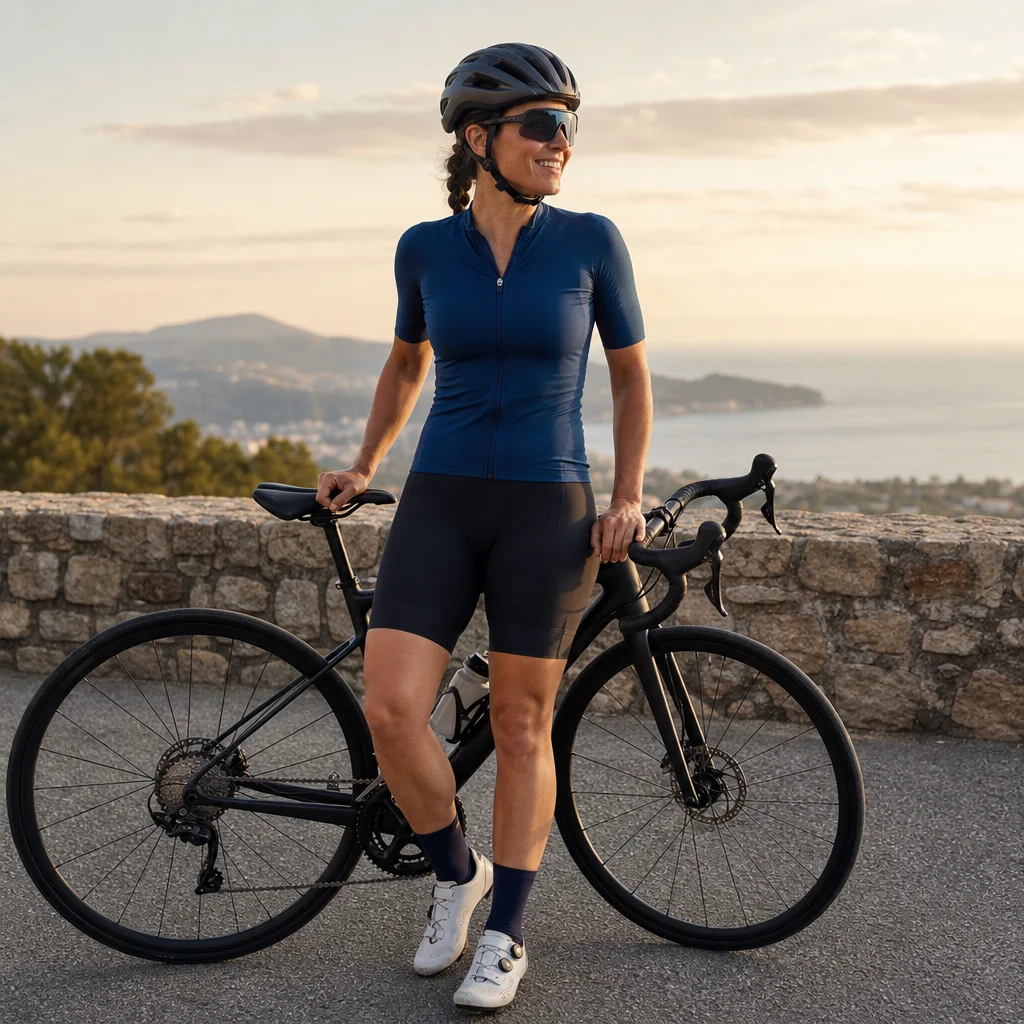
A crash or near miss can change a familiar ride in an instant. You may know that your bike is usable and still tense at every parked car, blind corner, or patch of rough pavement. Returning too quickly can reinforce that fear; waiting indefinitely can make the first ride feel even bigger.
The most efficient approach is usually gradual: address health and equipment concerns first, then rebuild control in low-pressure settings before adding traffic, distance, speed, or unfamiliar roads. You don’t need to buy a complete new setup or prove anything on your first ride.
Start with health, not confidence
Confidence is difficult to rebuild while you’re dealing with an untreated injury. After a crash, pay attention to symptoms such as worsening pain, weakness, numbness, confusion, unusual drowsiness, difficulty breathing, or changes in vision. A head impact, loss of consciousness, or uncertainty about what happened deserves particular caution.
Seek urgent medical help for severe or rapidly worsening symptoms, and follow local emergency guidance. For less urgent concerns, a healthcare professional can help you decide when cycling and exertion are appropriate. Don’t use a short test ride to diagnose yourself or to prove that an injury is minor.
A near miss without contact can still leave you sore, shaken, or distracted. If your attention is affected, postpone riding. The ability to scan, brake, steer, and make decisions matters more than maintaining a training schedule.
Check your return-to-riding advice: Before your first ride, confirm any medical recommendations, local cycling requirements, and current guidance from relevant road-safety or cycling organizations. These details vary by location and can change.
Review the crash without turning it into self-blame
Once you’re calm enough to think clearly, reconstruct the event in practical terms:
- Where were you looking immediately before it happened?
- What were the road, weather, lighting, and traffic conditions?
- Were you braking, cornering, changing position, or avoiding an obstacle?
- Did a mechanical issue, loose item, poor fit, or equipment failure contribute?
- Was the route asking for a skill you hadn’t practiced recently?
The goal isn’t to assign all responsibility to yourself. Roads and other people can create risks you can’t control. A useful review separates controllable factors from external ones, then identifies one or two changes that would reduce repeat risk.
For example, “I’m bad at descending” isn’t a very useful conclusion. “I entered a shaded, damp corner too quickly and braked abruptly while leaned over” gives you a skill and route choice to address. You might practice controlled braking on a flat, quiet surface and choose a gentler route while you regain trust.
Inspect the bike before spending money
A crash can damage parts that look fine at first glance. Check the frame, fork, wheels, tires, handlebar, stem, saddle, pedals, brakes, and shifting. Look for cracks, deep dents, unusual bends, exposed or damaged carbon, loose components, tire cuts, and wheels that no longer run true.
After a significant impact, or if you’re unsure whether a structural component is damaged, have the bike inspected by a qualified mechanic before riding it hard. This is often cheaper than replacing parts unnecessarily—and much cheaper than ignoring a problem that causes another loss of control.
Also check the simple items that influence confidence:
- Inflate the tires within the pressure range appropriate for the tire, wheel, rider, and road conditions.
- Confirm that both brakes engage smoothly and that the levers feel normal.
- Make sure the handlebars, stem, saddle, and wheels are secure.
- Replace a helmet after an impact or according to the manufacturer’s guidance; don’t rely on visible damage as the only test.
- Refit lights, bags, bottles, and computers so nothing can move into your steering or wheels.
You may not need a new bike, carbon wheels, or expensive protective accessories. A safety-focused inspection, a correctly fitted helmet, functioning lights when needed, and a well-maintained bicycle usually address more immediate concerns than an upgrade aimed at performance.
Choose your first rides for control, not mileage
Your first return ride should make it easy to stop, turn around, and take a break. A quiet, familiar road, low-traffic loop, or cycling facility can work well if its surface and access points are suitable for you. Avoid adding several challenges at once, such as heavy traffic, steep descents, strong wind, unfamiliar navigation, and a long distance.
A useful progression might look like this:
- Static reset: Sit on the bike in a safe place, check your position, and rehearse braking and shifting without moving.
- Short handling session: Practice starting, stopping, straight-line riding, wide turns, and looking over each shoulder in an empty or controlled area.
- Easy outdoor ride: Ride a short, familiar route at a pace that leaves attention available for scanning and decisions.
- One added challenge: Introduce a modest hill, a busier intersection, a longer distance, or a less familiar section—not all of them together.
- Normal riding: Return to more complex routes when the earlier stages feel repeatable rather than merely survivable.
There’s no required number of rides at each stage. Repeat a stage if you finish tense, rushed, or unable to remember the route clearly. Move back a stage if conditions change or a new situation produces a strong reaction.
Practice the skills connected to the incident
Confidence grows faster when you practice a specific response instead of simply riding more. Keep sessions short and stop before fatigue affects your control.
Braking
On a quiet, clean, level surface, practice applying both brakes progressively while keeping the bike straight. Learn how much pressure produces a controlled slowdown without grabbing suddenly. Repeat at modest speeds and leave plenty of space.
If you’re practicing emergency braking, use a surface where a lock-up or mistake is less likely to put you into traffic or an obstacle. The aim is familiarity with the controls, not maximum speed or a dramatic stop.
Looking and scanning
Many riders tense their arms and stare at the hazard after a scare. Practice looking through a turn, scanning behind you briefly, and returning your attention to the path ahead while maintaining a steady line. A mirror can reduce repeated shoulder checks, but it doesn’t replace a visual check when you need one.
Cornering and obstacle avoidance
Practice wide, relaxed turns before tighter ones. Keep your hands in a position that gives you reliable access to the brakes, and avoid sudden steering inputs. On a clean surface, rehearse riding around a clearly visible marker, then returning to your line. Don’t practice evasive maneuvers near traffic merely because the original incident involved traffic.
A skills class can be a good use of money if it provides structured feedback and a controlled setting. Look for an instructor or organization with appropriate qualifications for your area, and ask what the session covers before paying. A knowledgeable riding partner can also help, provided they create calm conditions rather than pressure you to keep up.
Manage the emotional part of returning
A crash can produce fear, embarrassment, anger, or repeated mental replay. These reactions don’t mean you’re incapable of riding. They do mean your attention and energy may be limited for a while.
Use a simple pre-ride check:
- Do I feel physically well enough to ride?
- Can I focus on traffic, surfaces, and control inputs?
- Do I have a route and turnaround option that I accept?
- Am I choosing this ride, or trying to satisfy someone else?
During the ride, notice whether your breathing becomes shallow, your grip tightens, or you begin missing ordinary road information. Slow down, pull over safely, or end the ride when needed. Finishing early is a sensible decision when concentration is deteriorating.
Afterward, record what went well and what needs practice. Keep the notes specific: “I stayed relaxed through three wide turns” is more useful than “I was fine.” This helps your brain collect evidence of competent actions instead of treating the entire ride as a single pass-or-fail event.
Decide when outside support is worth the cost
Start with the least expensive appropriate support. A trusted riding partner, a basic mechanic’s inspection, or a local skills session may be enough for a manageable concern. You may benefit from a healthcare professional, qualified cycling coach, or mental-health professional when the problem persists or affects daily life.
Consider seeking additional help if you:
- Continue avoiding all riding despite wanting to return.
- Have panic, intrusive memories, or sleep problems related to the incident.
- Can't concentrate safely on ordinary riding tasks.
- Feel pressured to ride despite pain or medical uncertainty.
- Keep repeating the same risky behavior without understanding why.
Professional support isn’t a failure or an unnecessary luxury. Paying for one well-targeted assessment can be more resource-efficient than buying equipment in response to anxiety, repeatedly attempting routes that are too difficult, or stopping and restarting without a plan.
A low-cost return plan
You can rebuild confidence with a small set of resources:
- A properly checked bicycle and correctly fitted helmet.
- A familiar route with an easy exit.
- A short skills session in a quiet area.
- A riding partner who respects your pace—or no partner at all.
- A phone, basic repair kit, water, and any medication or safety items you normally need.
- A written progression so each ride has one clear purpose.
Borrowing a bike, using a local park or quiet road, and practicing at home with the bike stationary can reduce costs. Don’t economize on a known structural defect, a damaged helmet, medical attention, or a situation where you can’t ride with adequate control.
Take the next small step
First, address symptoms and have the bike checked if the impact was significant or anything feels abnormal. Next, choose one easy route and one skill connected to the incident. Keep the first ride short enough that you can finish with attention and control still available.
Confidence usually returns through repeated, ordinary evidence: the brakes respond, the route is manageable, you can make a calm decision, and you know when to stop. Build those experiences gradually, spend money only where it solves a real problem, and let safety—not pride—set the pace.