How to Stop Comparing Your Rides With Faster Cyclists
I’ll clarify why faster riders can distort your view of a perfectly worthwhile ride, then show you how to use performance data, social rides, and realistic goals without spending more time, money, or energy chasing someone else’s numbers.
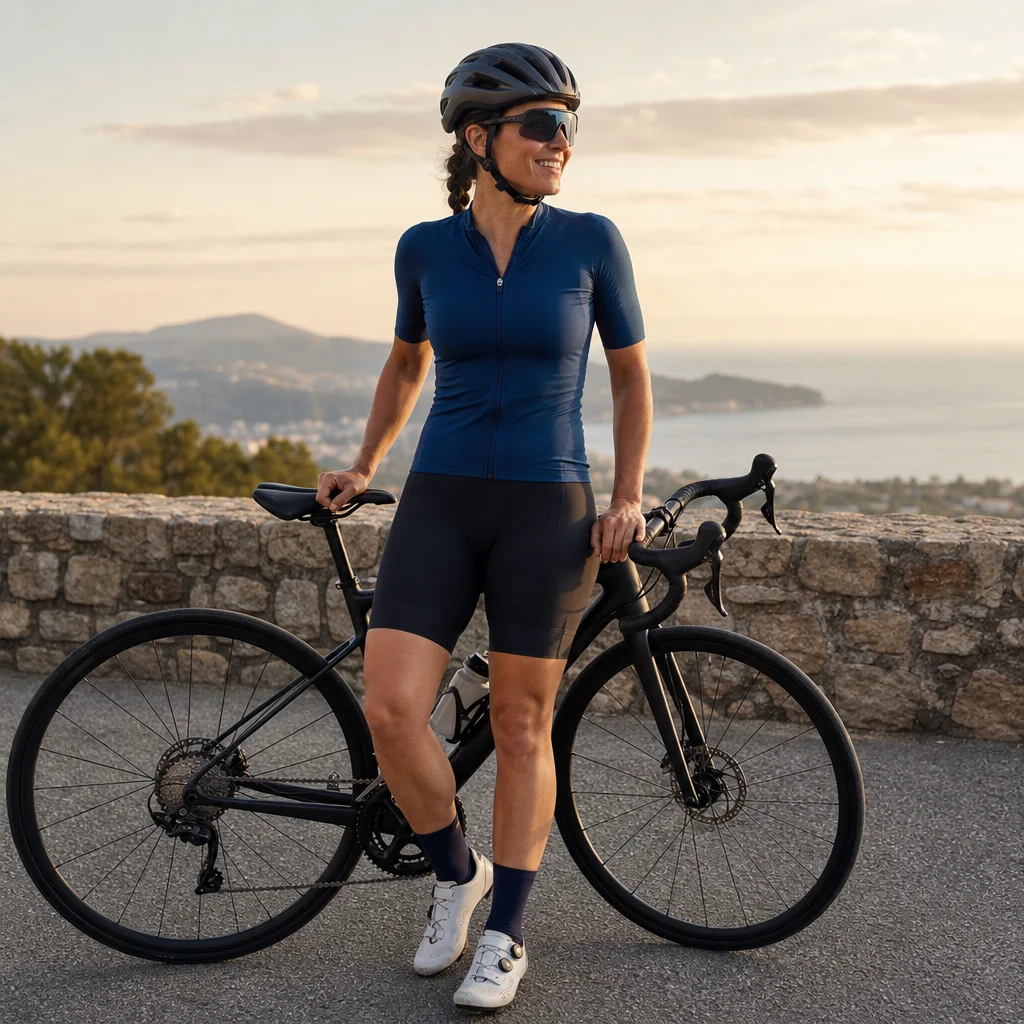
A faster cyclist in your feed or group ride can make a solid ride feel disappointing. You may finish farther than planned, handle a difficult climb, or ride consistently for the first time in weeks—then compare your average speed with someone else’s and decide it wasn’t enough.
That comparison often hides the real cost: it can push you toward harder training, unnecessary upgrades, and goals that don’t fit your time or priorities. You don’t need to stop noticing other riders’ performance. You need a better way to decide what their numbers mean for you.
Separate information from judgment
A faster rider’s result is information about that rider’s ride. It isn’t a verdict on yours.
Speed depends on more than fitness. Route length, elevation, wind, traffic, road surface, stops, temperature, bike choice, group drafting, fatigue, training history, and available time can all change the result. Even two people riding the same route may have very different conditions and purposes.
The problem begins when you turn a comparison into a judgment:
- “They averaged more, so I’m not improving.”
- “I need better equipment before I can enjoy this route.”
- “My ride only counts if I keep up.”
- “I should train harder, even though I’m already short on recovery time.”
Try replacing the judgment with a neutral question: What can this ride tell me about my own goals? That shift keeps useful information while discarding the part that drains motivation.
Choose a personal definition of a worthwhile ride
Comparison becomes less powerful when your ride has a clear purpose before you start. Your purpose doesn’t have to be ambitious. It just needs to be specific enough to guide your attention.
A worthwhile ride might mean:
- completing a planned distance without rushing
- riding for a set amount of time
- practicing smooth cornering or steady cadence
- exploring a new route
- getting outside after a demanding week
- building consistency with one or two rides
- reaching a familiar climb at a controlled effort
- riding socially without treating the group as a race
These goals cost less mental and physical energy than constantly trying to outperform an imaginary standard. They also make your data easier to interpret. If your goal is a relaxed two-hour ride, average speed is only one small detail—not the final score.
Write down your ride’s main purpose before you leave. When you return, assess that purpose first. Everything else is supporting information.
Use data to answer one useful question
Cycling computers and apps can help you notice trends, but they can also turn every ride into a public performance review. A simple way to keep data useful is to choose one question before looking at it.
For example:
- Did I ride for the planned duration?
- Was my effort more even than last time?
- Did I spend less time stopping on this route?
- Could I finish without feeling depleted?
- Did my pacing leave enough energy for the final climb?
- Did I practice the technique I intended to work on?
You don’t need to analyze every available metric. More data can create the impression that every number deserves action, even when it doesn’t. Limit your review to the measure that connects directly with your current goal.
Compare trends, not isolated results
One ride is noisy. A week with unusual wind, a poor night’s sleep, a detour, or a busy route can make your numbers look better or worse without showing a meaningful change in ability.
Look for patterns across similar rides. Compare the same route under roughly similar conditions, or compare effort and completion rather than speed alone. You might discover that you’re climbing with less strain, recovering faster, or riding more consistently—even if your average speed has barely changed.
If a metric repeatedly makes you anxious without helping you make a decision, hide it, remove it from your main display, or review it less often. That isn’t ignoring progress. It’s reducing noise.
Treat social rides as a choice, not a test
Riding with faster cyclists can be motivating, but it can also make you spend the entire ride trying not to get dropped. Before joining, consider what you want from the group and whether the pace supports it.
A social ride may be a good fit if you want conversation, route familiarity, practice riding around others, or a manageable challenge. It may not be the right fit if you’re already tired, rebuilding consistency, or likely to spend the whole ride at an unsustainable effort.
You have several options besides either keeping up or staying home:
- Ask about the expected pace and distance before the ride.
- Choose a group with a stated pace that matches your current ability.
- Tell the leader if you may need to ride at your own pace.
- Arrange a regroup point rather than trying to stay attached every mile.
- Ride only part of the route.
- Meet the group for coffee or a short section without treating the outing as a performance test.
A good group ride should fit your goals often enough to be worth the time and recovery it requires. If every outing leaves you discouraged or excessively tired, the cost may be higher than the benefit.
Check the ride’s real demands: Before joining a group, confirm the distance, climbing, expected pace, regrouping plan, and whether riders can leave early. Clear details help you choose a challenge instead of accidentally entering a race.
Avoid buying solutions to an emotional problem
Feeling slower than other riders can create an urge to buy something: lighter wheels, a newer bike, aerodynamic clothing, a power meter, or another upgrade. Equipment can be useful, but it can’t resolve every uncomfortable comparison.
Before spending money, identify the problem you’re trying to solve. If the issue is an uncomfortable saddle, unreliable shifting, poor visibility, or inadequate carrying capacity, an upgrade may be sensible. If the issue is that another rider posted a faster time, the purchase may only move the comparison to a new number.
Use a short decision test:
- What specific limitation does this item address?
- How often will it affect my riding?
- Is there a lower-cost adjustment or maintenance fix?
- Would I still want it if I stopped checking other riders’ results?
- Does it support my actual riding goals?
This approach protects your budget and keeps equipment in its proper role: helping you ride more comfortably, reliably, or safely—not proving that your rides are valid.
Build a comparison system that costs less attention
You don’t have to delete every cycling app or avoid all fast riders. Instead, decide when comparison is useful and when it’s simply consuming attention.
You could review your own training data once a week, while muting activity notifications that trigger unhelpful reactions. You could follow riders who explain their process rather than only displaying results. You could keep a private ride log with three simple notes: what you planned, what happened, and what you’ll adjust next time.
If you use a public platform, remember that you’re usually seeing selected highlights rather than the full context. People may upload their fastest rides more readily than their easy spins, missed workouts, mechanical problems, or tired days. A feed isn't a complete record of anyone’s cycling life.
Use faster riders as resources when appropriate
A faster cyclist can still help you. Ask how they pace a long climb, carry food, plan a route, or manage a headwind. Focus on transferable decisions rather than trying to reproduce their result immediately.
You might learn that they start more slowly, eat earlier, use a different route, or train more consistently. Some lessons may fit your situation; others may not. Your job is to evaluate the method, not copy the outcome.
A useful question is: What is one low-cost habit from this rider that could make my next ride smoother? That might be checking the weather, carrying an extra snack, leaving ten minutes earlier, or keeping the first part of the ride controlled.
Measure progress in ways that support enjoyment
Speed is one form of progress, but recreational cycling offers many others. You can become more confident in traffic, more comfortable on descents, more consistent with maintenance, or better at choosing an effort you can sustain.
You may also be progressing if you’re riding more often, recovering better, planning realistic routes, or finishing with enough energy to enjoy the rest of your day. These improvements are valuable because they make cycling easier to continue. They don’t require you to add expensive equipment or sacrifice every free hour to training.
The most useful comparison is often between your current habits and the habits that help you ride well. Are you preparing sensibly? Are you choosing routes that match your time? Are you recovering when needed? Are you learning from setbacks instead of treating them as evidence that you don’t belong?
Practical next steps
For your next three rides, try this simple process:
- Set one purpose before you start.
- Choose one metric or observation that relates to that purpose.
- Avoid judging the ride by someone else’s posted result.
- Note one thing that worked and one thing to adjust.
- Decide whether any change is worth the time, effort, or money it requires.
Faster cyclists can provide inspiration, useful ideas, and enjoyable company. They don’t need to set the value of your ride. When you measure progress against your own priorities, your data becomes more helpful, social riding becomes more intentional, and cycling takes fewer resources to enjoy well.