Road Bike Fit Adjustments for Winter Layers and Bulky Clothing
Bulky layers can shorten your reach, crowd your shoulders, and make brake access awkward. I’ll show you which clothing-first adjustments can restore comfort and control—and which bike changes should stay temporary through winter.
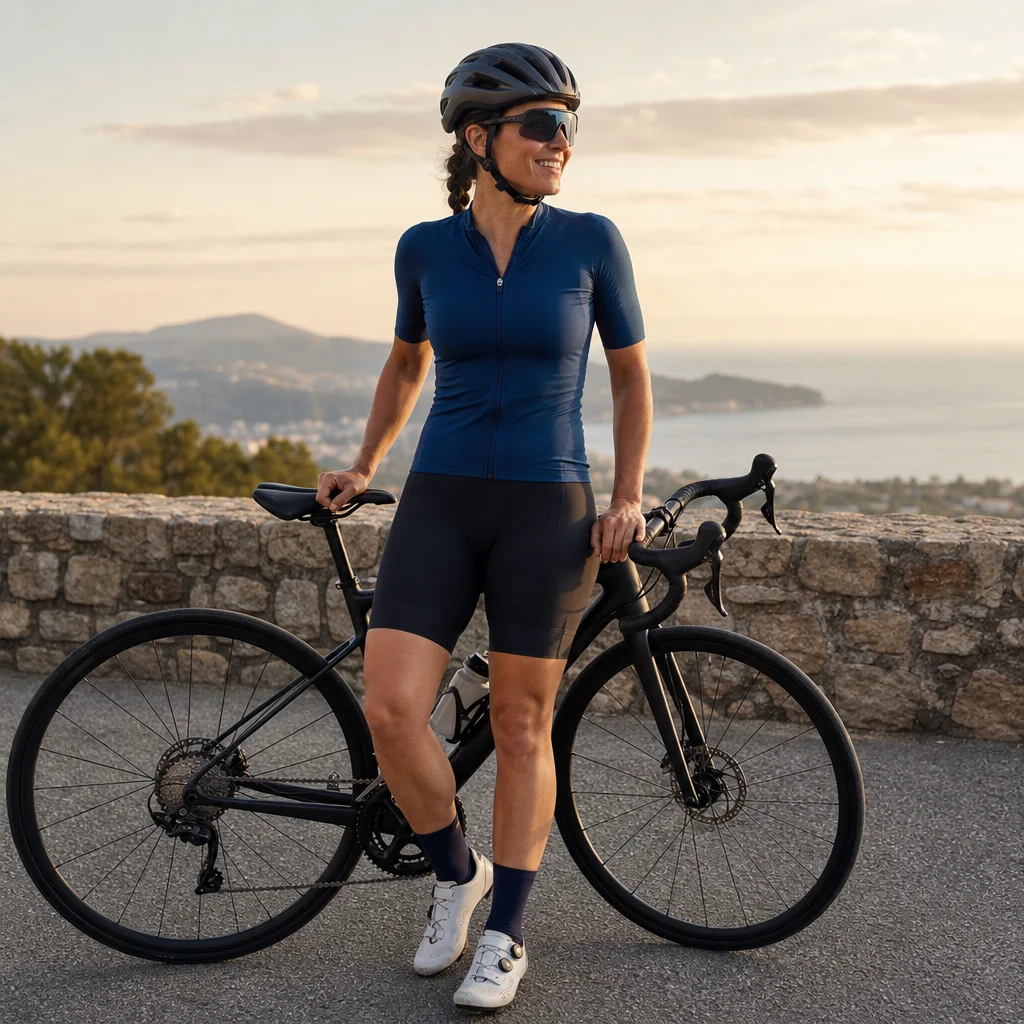
Cold-weather clothing can change your position on the bike more than you expect. A thick base layer, insulated jacket, winter gloves, and shoe covers all take up space, restrict movement, or alter how easily you reach the controls. If you adjust the bike before accounting for the clothing, you can create a setup that works only with one specific outfit.
The safest approach is to treat winter fit as a clothing-and-contact-point problem first. Put on the layers you actually plan to ride in, identify where movement or control is compromised, and make the smallest temporary change that solves it.
Start with your complete riding outfit
Fit the bike while wearing the clothing that causes the problem—not a thin jersey indoors. Use the same base layers, jacket, gloves, tights, overshoes, and helmet setup you expect to wear on a typical cold ride.
Pay attention to four contact areas:
- Shoulders and upper back: Can you reach the bars without the jacket pulling across your chest or neck?
- Hands: Can you comfortably cover the brake levers with your winter gloves?
- Hips and knees: Does extra fabric bunch under you or restrict your pedal stroke?
- Feet: Do your shoes still close securely without pressure or numbness?
Ride or sit on the bike for several minutes rather than judging the fit while standing still. Cold-weather clothing often feels acceptable at first but becomes restrictive when you bend your elbows, rotate your shoulders, or move between the hoods and drops.
How winter layers affect reach
A bulky jacket can make the handlebars feel farther away even when the bike hasn't changed. Insulation adds thickness across your chest and shoulders, while stiff fabric can resist the forward reach needed to hold the hoods comfortably.
This often leads to a familiar mistake: sliding the saddle forward or replacing the stem immediately. Those changes may reduce the apparent reach, but they can also alter your pedaling position, weight distribution, and handling.
Before changing the bike, try these clothing-focused solutions:
- Remove unnecessary bulk from the torso. A well-fitting base layer and midlayer may provide warmth with less restriction than one oversized garment.
- Check jacket sizing. A jacket should allow a cycling position without pulling tight across the shoulders, but excessive material can bunch around the waist and arms.
- Close or reposition vents and cuffs. Loose cuffs can catch on gloves or limit wrist movement.
- Use a riding posture with relaxed elbows. Locked elbows make a restricted jacket feel even more limiting.
- Test the hoods and drops separately. You may have enough mobility for one hand position but not the other.
If your shoulders remain strained after these steps, a small temporary cockpit adjustment may help. The goal isn't to make the bike permanently shorter for winter, but to give you a neutral position in the clothing you need.
Check shoulder comfort before changing reach
Shoulder discomfort isn't always a reach problem. It can come from raising your shoulders against the cold, gripping the bars too tightly with thick gloves, or wearing a jacket that limits arm movement.
With your hands on the hoods, your elbows should have a slight bend. Your shoulders should stay away from your ears, and you should be able to look ahead without feeling pulled forward. If you have to shrug, round your upper back sharply, or stretch your arms to maintain contact, investigate the clothing and posture before making a major fit change.
A useful test is to briefly relax your grip and let your elbows bend while keeping your hands secure. If the jacket immediately pulls across your back or armpits, the garment may be the limiting factor. If the clothing moves freely but you still feel stretched, the cockpit may need a modest adjustment.
Make reach changes small and temporary
If winter clothing genuinely changes your usable reach, make one small change at a time. Depending on your bike and existing setup, that could mean a modest adjustment to the stem position, handlebar height, or hood placement. Record the original position first so you can return to it when lighter clothing comes back.
Avoid making several changes together. If you move the saddle, raise the bars, rotate the handlebars, and reposition the brake hoods at once, you won't know which change helped—or whether one created a new problem.
A temporary winter adjustment should preserve these basics:
- Your knees should continue to track comfortably through the pedal stroke.
- You shouldn't feel unusually compressed at the hips.
- The bike should still feel stable when you ride out of the saddle.
- You should be able to use both brakes without stretching or twisting your wrists.
- Cable and hose routing shouldn't be placed under excessive tension.
Don't force a component beyond its markings or alter a fastener without knowing the correct setup. If a change involves cutting, replacing, or substantially repositioning a component, it is better treated as a proper fit or service job rather than a quick seasonal tweak.
Check your winter controls before riding away
With your full gloves and outer layers on, confirm that you can shift, cover both brakes, turn the handlebar normally, and reach your preferred hand positions without fabric catching or restricting movement. Test these controls at low speed in a safe area before committing to a longer ride.
Improve hand access with gloves and cuffs
Thick gloves can make the brake levers feel farther away and reduce finger dexterity. They can also encourage you to wrap your entire hand around the bar, making it harder to cover the brakes quickly.
Start by checking whether the gloves are simply too bulky for the controls. A glove that is warm but excessively loose can bunch in the palm and reduce your grip. One that is too tight can limit finger movement and make your hands tire sooner.
Try your normal positions while wearing the gloves:
- On the hoods, can your index and middle fingers rest near the brake levers?
- In the drops, can you reach the levers without forcing your wrists downward?
- While shifting, can you move your fingers independently?
- Can you release and re-establish your grip without the glove catching on the bar tape or jacket cuff?
If the answer is no, solve the glove or cuff problem before moving the controls. A tighter cuff, a different glove thickness, or a jacket sleeve that stays clear of the hand can restore access without changing the bike.
Some bikes have adjustable brake-lever reach, but use that feature cautiously and consistently on both sides. Changing lever position can affect how the controls feel and may not suit every braking system. If you are uncertain about the adjustment, have a qualified bicycle mechanic check it.
Account for extra layers at the saddle
Winter tights, thermal bibs, and extra base layers can change how you sit on the saddle. The material may add height, compress differently, or bunch behind the knees. Heavy overtrousers can also change how easily your hips rotate while pedaling.
First, make sure the layers fit smoothly. Pull tights and bib straps into their intended position before judging saddle height. Remove wrinkles beneath you, and check that the chamois is positioned correctly. Clothing that shifts during a ride can create pressure that feels like a saddle problem.
If the clothing adds noticeable height, your effective saddle position may feel slightly higher. Don't respond by making a large change. Mark the original position, adjust minimally if needed, and check for new symptoms such as rocking hips, reaching at the bottom of the stroke, or pressure at the front of the knee.
The saddle may also feel different because winter fabric reduces your ability to move forward and backward. A stiff outer layer can make a normally flexible position feel fixed. That is another reason to improve clothing fit before changing saddle setback or height.
Don’t overlook shoes, overshoes, and helmet fit
Shoe covers can make footwear harder to close and may change how easily you engage with the pedals. Check that your shoes are secure without excessive pressure and that the covers don't interfere with the cleat or pedal mechanism.
Don't compensate for tight winter footwear by changing cleat position casually. Cleat changes affect your leg alignment and can create problems well beyond the cold season. If your shoes no longer fit comfortably, a roomier winter shoe or thinner, warmer sock may be a better solution.
A winter cap or thick headband can also affect helmet fit. The helmet should remain stable and sit in its intended position, with straps lying correctly around your ears and under your chin. Don't loosen it so much that it moves when you turn your head or look over your shoulder.
Common winter fit mistakes to prevent
Changing the saddle to solve a jacket problem
Moving the saddle forward can make the bars feel closer, but it changes your relationship to the pedals. Check the jacket, posture, and cockpit first.
Using oversized clothing as a substitute for layering
Extra room doesn't always mean better mobility. Loose fabric can bunch at the waist, catch on controls, and make it harder to hold a consistent position. Several well-fitting layers are often easier to manage than one oversized garment.
Testing only one hand position
A setup that feels fine on the hoods may become restrictive in the drops. Include your realistic riding positions in the test, especially if you use the drops for descents or stronger headwinds.
Making permanent changes for a temporary season
Winter clothing changes throughout the season. A setup for a heavy insulated jacket may feel too short or upright in a lighter spring jacket. Record temporary changes and return the bike to its normal position as conditions change.
A simple winter fit sequence
Use this order when your bike feels uncomfortable in cold weather:
- Put on the complete outfit, including gloves and helmet.
- Check that every layer fits smoothly and allows shoulder and hip movement.
- Confirm brake, shift, and hand access at low speed.
- Correct clothing, cuff, glove, or footwear problems first.
- Make one small bike adjustment only if the restriction remains.
- Record the change and test it on a short ride.
- Recheck the setup when you switch to lighter clothing.
Your winter bike fit doesn't need to be dramatically different. Most problems come from trying to make the bike compensate for clothing that is too restrictive, too loose, or poorly positioned. Start with the layers, protect your normal pedaling relationship, and keep any seasonal fit changes small, documented, and easy to reverse.久久热