A Simple Off-Season Strength Routine for Recreational Road Cyclists
I’ll show you how to build a simple off-season strength routine that supports recreational road cycling without requiring a gym or turning winter training into bodybuilding. You’ll get a manageable weekly plan, exercise substitutions, and clear ways to progress safely.
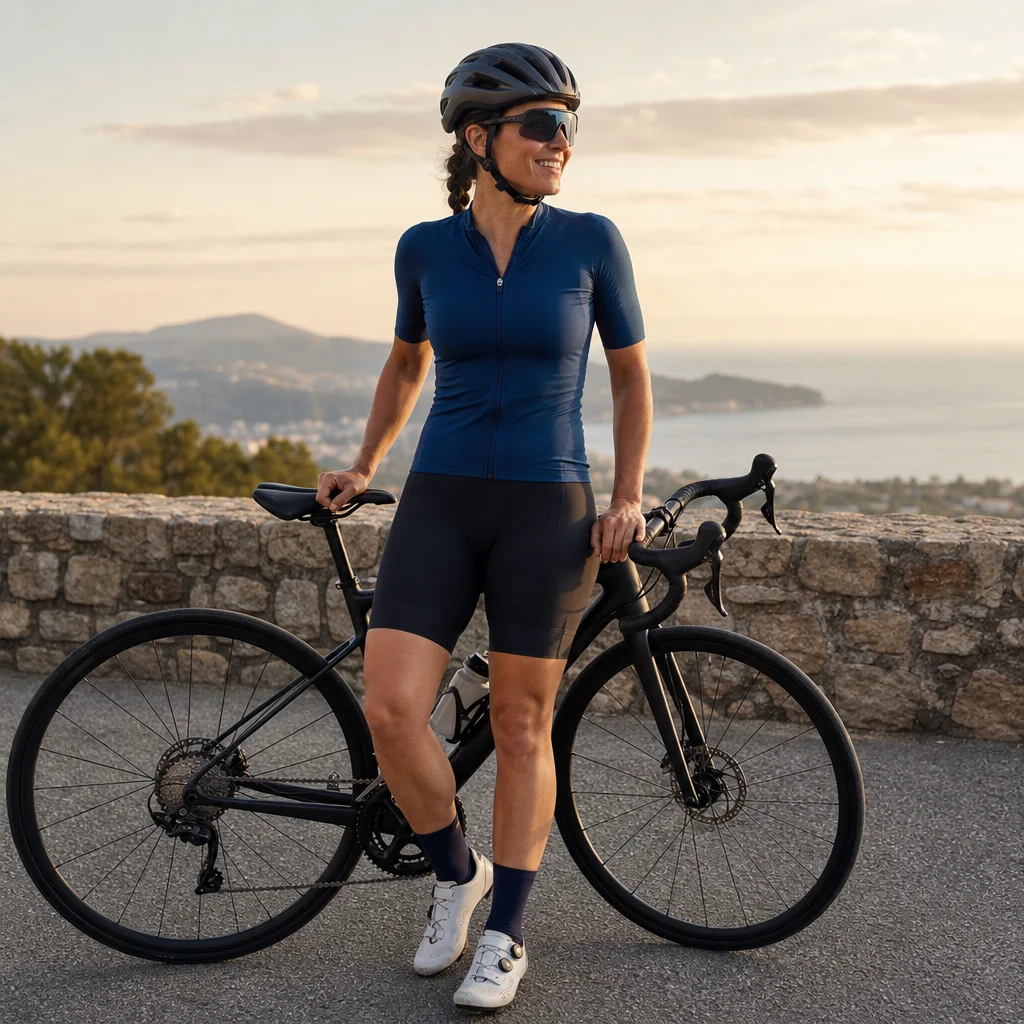
Cold weather and shorter riding days can make it harder to maintain your usual cycling routine. Strength training can fill that gap, but you don’t need a complicated program, heavy barbell lifts, or hours in a gym.
A simple routine built around your legs, hips, core, and upper body can help you stay generally strong while your cycling volume is lower. The goal isn't to maximize muscle size. It’s to build useful strength, maintain movement quality, and arrive at the next riding season ready to increase your time on the bike.
Start with two short sessions per week
For most beginner and intermediate recreational cyclists, two strength sessions per week are enough during the off-season. Leave at least one day between them so your muscles and connective tissues have time to recover.
Each session can take 30 to 45 minutes:
- Warm up for 5 to 8 minutes.
- Complete five or six basic exercises.
- Perform two or three controlled sets of each exercise.
- Finish with easy mobility rather than exhausting stretching.
You can train on non-riding days or place a strength session after an easy ride. Avoid putting a demanding leg workout immediately before your longest or hardest ride of the week.
If you’re new to strength training, begin with two sets per exercise. The first goal is consistent technique, not fatigue.
Use a balanced exercise selection
Cycling emphasizes repeated leg movement in a relatively fixed position. Your off-season routine should therefore train the major leg muscles while also including the hips, trunk, back, and shoulders.
1. Squat variation
Choose a bodyweight squat, goblet squat, or sit-to-stand from a sturdy chair.
Perform 2–3 sets of 8–12 repetitions. Keep your feet stable, lower under control, and stand without letting your knees collapse inward. A chair is useful when you’re learning the movement because it gives you a consistent depth and a clear stopping point.
To make the exercise harder, hold a dumbbell or backpack close to your chest. Add resistance only when you can complete every repetition with steady form.
2. Hip hinge or Romanian deadlift
The hip hinge trains your glutes and the muscles along the back of your legs. Use light dumbbells, a kettlebell, or a loaded backpack if you have them. You can also practice the movement without weight.
Complete 2–3 sets of 8–12 repetitions. Keep a soft bend in your knees, push your hips backward, and keep your back in a comfortable neutral position. The weight should stay close to your legs. Stand by driving your hips forward rather than leaning backward.
This exercise is different from a squat: your hips move back more, while your shins remain relatively upright.
3. Step-up or split squat
Single-leg exercises are useful because cycling applies force one leg at a time. Start with low step-ups or supported split squats before trying a higher box or deeper range of motion.
Perform 2 sets of 6–10 repetitions per side. Use a wall or chair for balance if necessary. Push through the whole working foot and control the lowering phase instead of dropping onto the other leg.
Don’t rush to add weight. Balance and control matter more than making the movement look difficult.
4. Calf raise
Calf raises are simple, require little equipment, and train muscles that contribute to ankle stability and force transfer during pedaling.
Do 2–3 sets of 12–20 repetitions. Hold a wall lightly for balance, rise smoothly, pause briefly at the top, and lower with control. Begin with both legs and progress to one leg if the movement feels easy and stable.
5. Core stability exercise
Your core routine doesn’t need to focus on endless crunches. Exercises that resist movement can help you practice keeping your trunk steady while your limbs work.
Choose one or two of these options:
- Front plank: 2–3 sets of 15–30 seconds
- Side plank: 2 sets of 15–30 seconds per side
- Dead bug: 2–3 sets of 6–10 repetitions per side
- Bird dog: 2–3 sets of 6–10 repetitions per side
Stop a plank when your hips sag or your back starts to arch. With dead bugs and bird dogs, move slowly enough to keep your torso from twisting.
6. Upper-body pull and push
Cycling doesn’t require a large upper body, but your back, chest, shoulders, and arms still benefit from basic strength work. This can support a more comfortable position on the bike and help with everyday activities.
Pair one pulling exercise with one pushing exercise:
- One-arm dumbbell row or resistance-band row: 2–3 sets of 8–12 repetitions
- Incline push-up, regular push-up, or dumbbell floor press: 2–3 sets of 6–12 repetitions
For push-ups, use a kitchen counter or sturdy table if floor push-ups are too difficult. For rows, keep your shoulder away from your ear and avoid twisting your body to lift the weight.
A sample two-day routine
You can use the following structure without needing a full gym setup.
Session A
- Bodyweight or goblet squat: 2–3 sets of 8–12
- Romanian deadlift: 2–3 sets of 8–12
- Incline push-up: 2–3 sets of 6–12
- Side plank: 2 sets per side
- Calf raise: 2–3 sets of 12–20
Session B
- Step-up or split squat: 2–3 sets of 6–10 per side
- Hip bridge: 2–3 sets of 10–15
- Resistance-band or dumbbell row: 2–3 sets of 8–12
- Dead bug: 2–3 sets of 6–10 per side
- Calf raise: 2–3 sets of 12–20
The hip bridge is a useful alternative when a weighted hip hinge feels unfamiliar. Lie on your back with your feet planted, lift your hips without overextending your lower back, and lower slowly.
You don’t have to complete every exercise perfectly on your first week. If six exercises feel like too much, select one movement from each group: squat, hinge, single-leg, core, and upper body.
Progress gradually without chasing exhaustion
Strength training works through repeated, manageable challenges. You don’t need to finish every set breathless or sore.
Use a simple progression system:
- Learn the movement with bodyweight or very light resistance.
- Add repetitions within the recommended range.
- Add a small amount of resistance when the top of the range feels controlled.
- Return to the lower end of the repetition range and build again.
For example, you might begin goblet squats with two sets of eight repetitions. Over several sessions, progress to two sets of twelve. Then add a small amount of weight and return to two sets of eight.
Keep roughly two or three good repetitions in reserve at the end of most sets. This leaves room for technique and recovery. If your form changes substantially or you have to hold your breath to finish, the exercise is probably too heavy or the set is too long.
Check your winter training boundaries: Before starting or substantially increasing strength work, review any current guidance from a qualified health professional if you have an injury, medical condition, balance concern, or long period of inactivity. Stop and seek appropriate advice for sharp pain, chest pain, faintness, or symptoms that persist after training.
Adjust the routine around riding
Strength training should support your cycling rather than compete with it. During the off-season, you may be riding less, but hard indoor intervals, group rides, and long weekend outings still add stress.
A sample week might look like this:
- Monday: Strength Session A
- Tuesday: Easy ride or rest
- Wednesday: Mobility or easy ride
- Thursday: Strength Session B
- Friday: Rest
- Saturday: Longer easy ride
- Sunday: Optional short recovery ride or rest
If your legs feel heavy before an important ride, reduce the number of sets or skip the single-leg exercise that week. If you’re doing little or no cycling, you can keep both strength sessions but still include at least one full rest day.
As spring approaches, maintain two strength sessions at first while gradually increasing riding. Once riding becomes your main training priority, one full-body strength session per week may be enough to maintain your progress.
Keep the equipment simple
You can make meaningful progress with bodyweight exercises, a resistance band, and one or two adjustable dumbbells. A backpack filled with carefully secured books can provide resistance, but make sure it sits comfortably and doesn’t shift during movement.
A gym can offer more loading options, but it isn’t required. Choose equipment that makes it easier for you to train consistently. A routine you can complete in a spare room is often more useful than an elaborate plan that requires a long drive in poor weather.
Warm clothing and a little extra time may be necessary if you train in a cold garage or basement. Your muscles and joints may need a longer gradual warm-up before loaded movements feel comfortable.
Common mistakes to avoid
Doing too much too soon
Winter motivation can lead you to start with heavy weights, high-volume circuits, and daily workouts. That approach often creates soreness that interferes with riding. Begin with less than you think you can tolerate and increase gradually.
Treating soreness as the goal
Mild muscle soreness can occur when you begin, but it isn’t a reliable measure of a good workout. Severe soreness can make it harder to pedal, walk, or maintain good technique. Reduce volume if soreness affects normal movement or lasts several days.
Ignoring movement quality
A heavier dumbbell won’t compensate for unstable knees, a rounded back under load, or uncontrolled repetitions. Use a mirror, record a set from the side, or ask a qualified coach for feedback if you’re unsure.
Neglecting recovery
Sleep, food, rest days, and easy rides all influence how well you adapt. Strength training is only one part of an off-season plan. If your cycling and strength sessions leave you constantly fatigued, reduce the overall workload before adding more exercises.
Your next steps
Start with two sessions this week, using bodyweight versions of the squat, hip hinge, step-up, core, push, and pull patterns. Keep the first two weeks deliberately easy while you learn the movements. Record the exercises, sets, repetitions, and how each session felt.
After that, add repetitions before resistance, and resistance before extra training days. The best off-season routine is the one that builds useful strength, leaves you able to ride when weather allows, and remains simple enough to repeat until spring.