What to Do When Your Legs Feel Fine but Your Breathing Doesn't
When your legs feel comfortable but your breathing becomes difficult, pacing and conditions may be the real problem—not a lack of strength. I’ll explain how to adjust effort, warm-up, terrain, and expectations so you can respond sensibly.
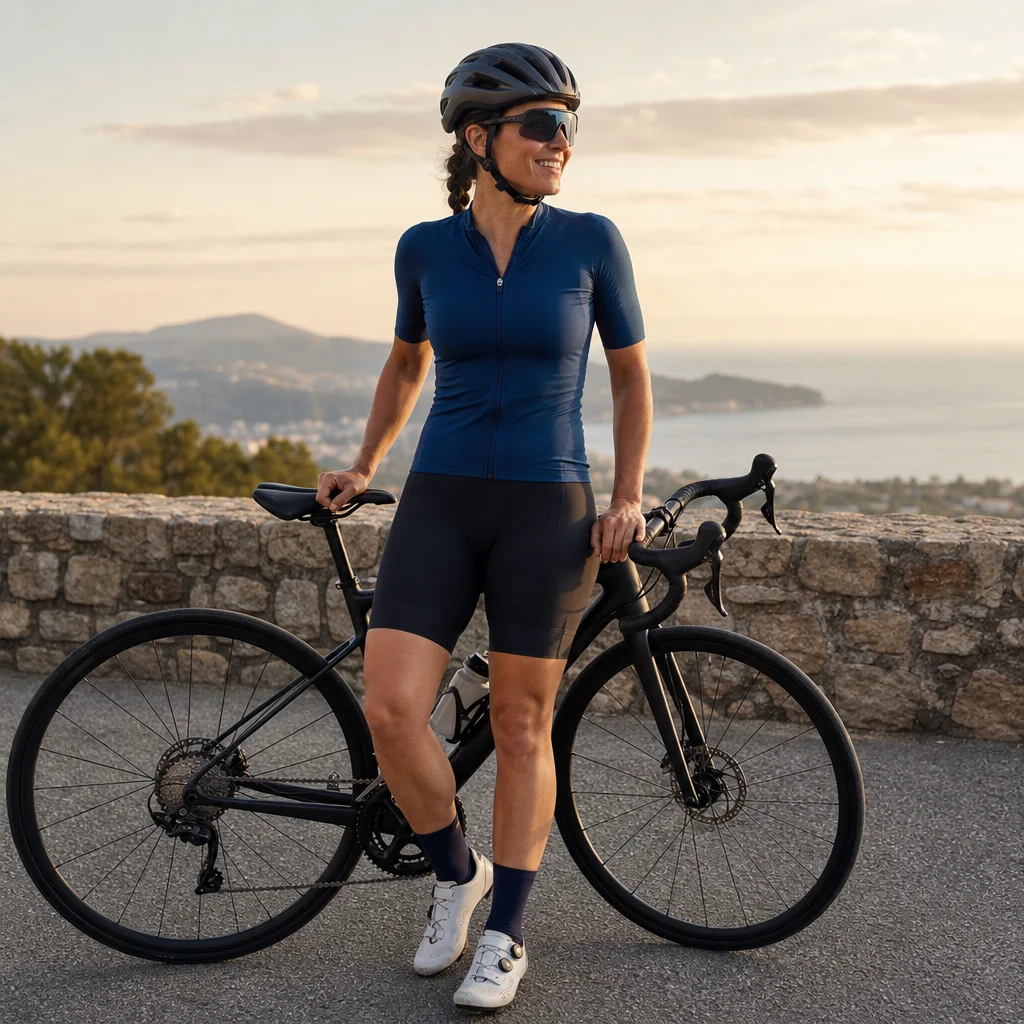
It’s possible to feel strong in your legs while your breathing becomes the limiting factor. You may still have plenty of muscular energy, yet find yourself taking short, rapid breaths and struggling to speak comfortably. This mismatch is common, especially when a ride includes a sudden climb, a fast group, heat, or an effort that starts harder than it feels.
The goal isn’t to force your breathing to match your legs. Instead, use the mismatch as useful information. It often means your cardiovascular system is working harder than your current pacing, conditioning, or riding conditions can support.
First, reduce the effort before you diagnose the problem
When breathing feels out of control, shift to an easier gear and reduce your pressure on the pedals. If you’re climbing, slow down rather than trying to preserve your previous speed. Give your breathing a minute or two to settle before deciding whether something more serious is happening.
A small reduction in effort can make a large difference. Aerobic demand rises quickly when you move from a comfortable pace to a hard one, even if your legs don’t immediately feel tired. Your muscles may be capable of producing more force, but your heart and lungs still have to deliver oxygen and remove carbon dioxide at the higher intensity.
Use the talk test as a simple guide:
- Easy effort: You can speak in complete sentences without pausing.
- Moderate effort: You can talk, but you prefer shorter sentences.
- Hard effort: You can manage only a few words at a time.
- Very hard effort: Speaking is difficult or impossible.
For most beginner rides, spend more time in the first two categories. Brief harder efforts are reasonable when planned, but they shouldn’t happen accidentally every time the road tilts upward.
Common reasons your breathing gets ahead of your legs
You started too hard
Fresh legs can make an aggressive pace feel easy at the start of a ride. You may accelerate from a stop, chase a faster rider, or attack the first hill without noticing how much effort you’re using. Breathing often catches up a few minutes later.
A better approach is to make the first 10 to 15 minutes deliberately easy. Let your body settle into the ride before increasing speed. If you still feel comfortable after warming up, add effort gradually rather than making one large jump.
The terrain changed suddenly
A short hill can raise your breathing rate quickly, particularly if you try to maintain the same speed you had on flat ground. Speed is a poor target on a climb because wind, gradient, and road surface change the amount of work required.
Instead, allow your speed to fall. Shift into an easier gear before your cadence slows dramatically, and remain seated when that helps you keep your effort smooth. If your breathing becomes ragged, ease off for a minute. A slower climb is usually more sustainable than a brief push followed by a long recovery.
You’re riding into wind
Headwinds can create the same problem as a climb. Your legs may feel normal because the resistance builds gradually, while your breathing reflects the extra effort required to maintain speed.
On a windy section, judge effort by breathing and perceived exertion rather than your usual speed. You may need to accept a slower pace on the way out so you don’t spend the return trip exhausted.
Heat, humidity, and poor hydration are adding stress
Hot conditions increase the demand on your body even when the route and speed remain unchanged. Humidity can make cooling less effective, and dehydration can make a familiar effort feel unusually difficult.
Ride earlier or later when practical, choose shaded routes, and drink regularly. Don’t wait until you feel severely thirsty. For longer rides or very warm conditions, food and fluids matter more than they do on a short, easy outing.
If you feel dizzy, confused, unusually weak, chilled despite the heat, or unable to keep fluids down, stop riding and move to a cooler place. Seek prompt medical help for severe or worsening symptoms.
Know when breathing needs more than a pacing change: Stop riding if shortness of breath is severe, sudden, or accompanied by chest pain, faintness, blue or gray lips, confusion, or unusual wheezing. If symptoms don’t settle with rest, seek urgent medical care; recurring breathlessness also deserves discussion with a healthcare professional.
Use your warm-up to prevent the mismatch
A warm-up doesn’t need to be complicated. Start in an easy gear and ride gently for 10 to 15 minutes. Keep your cadence comfortable and avoid sprinting, standing hard on the pedals, or racing up early hills.
A gradual warm-up gives your breathing and circulation time to respond before you ask for more power. It can also reveal whether a difficult feeling is simply the result of starting cold. If breathing remains unusually strained during an easy warm-up, don’t treat that as a challenge to overcome. Consider shortening or ending the ride.
When the route begins with a climb, warm up on flat or gently rolling roads first if possible. If that isn’t practical, keep the opening climb easier than your planned riding effort.
Check your breathing technique, but don’t force it
Many riders tense their shoulders, grip the bars tightly, and breathe shallowly when effort rises. Relax your hands, drop your shoulders, and keep your upper body quiet. These changes won’t remove the underlying workload, but they can reduce unnecessary tension.
Try to maintain a steady breathing rhythm instead of taking increasingly frantic breaths. Some cyclists find it useful to exhale fully and regularly, especially on a climb. You don’t need to follow a rigid count; the aim is simply to avoid holding your breath while pushing hard.
Nasal breathing can be comfortable during easy riding, but it isn’t a requirement at higher intensities. If you need to breathe through your mouth, do so. Breathing should support the effort, not become another technique you’re trying to perform perfectly.
Match effort to the purpose of the ride
A common mistake is treating every ride as a test. If the purpose is recovery, exploration, or building endurance, there’s no benefit in turning every hill into a time trial.
Before you start, choose a broad effort target:
- Easy endurance ride: Keep the pace conversational and leave room to continue.
- Steady fitness ride: Work moderately, but avoid repeated periods where talking becomes difficult.
- Hard interval session: Use planned efforts with easier recovery periods, rather than riding hard continuously.
If your breathing is much harder than the ride requires, reduce the intensity. Your legs may be able to continue, but that doesn’t mean continuing at the same pace is the best training decision.
When the pattern may need closer attention
An occasional mismatch after a hard start, steep hill, or hot day is usually easy to explain. Pay closer attention when it happens during easy riding, appears suddenly without an obvious cause, or is becoming more frequent.
Other factors can affect breathing and performance, including illness, allergies, poor sleep, anxiety, medication changes, and conditions such as asthma. A heart-rate monitor may help you notice patterns, but it isn’t a diagnosis. Equipment can also give confusing readings, particularly if a sensor is loose or inaccurate, so combine data with how you actually feel.
Keep a brief note after unusual rides: route, temperature, effort, food and fluids, sleep, and how long it took your breathing to recover. This can help you identify a straightforward pattern and gives a healthcare professional more useful information if you need advice.
Practical next steps
On your next ride, try this sequence:
- Warm up gently for 10 to 15 minutes.
- Use the talk test to keep the opening pace controlled.
- Shift to an easier gear before a hill forces you to grind.
- Let speed fall into a headwind or on a climb.
- Relax your shoulders and keep your breathing steady.
- Stop and assess yourself if breathing feels severe, unusual, or slow to recover.
Your legs feeling fine isn't a reason to ignore difficult breathing. It’s a signal to reassess the effort, conditions, and purpose of the ride. With better pacing and a little more attention to heat, terrain, and recovery, you can often make the ride smoother without needing to push harder.