How to Keep Riding When Your Usual Route Stops Feeling Interesting
A familiar route can lose its appeal long before your interest in cycling does. I’ll show you how to combine small route changes, skill-focused rides, social variety, and easier outings to make riding feel fresh without chasing distance or speed.
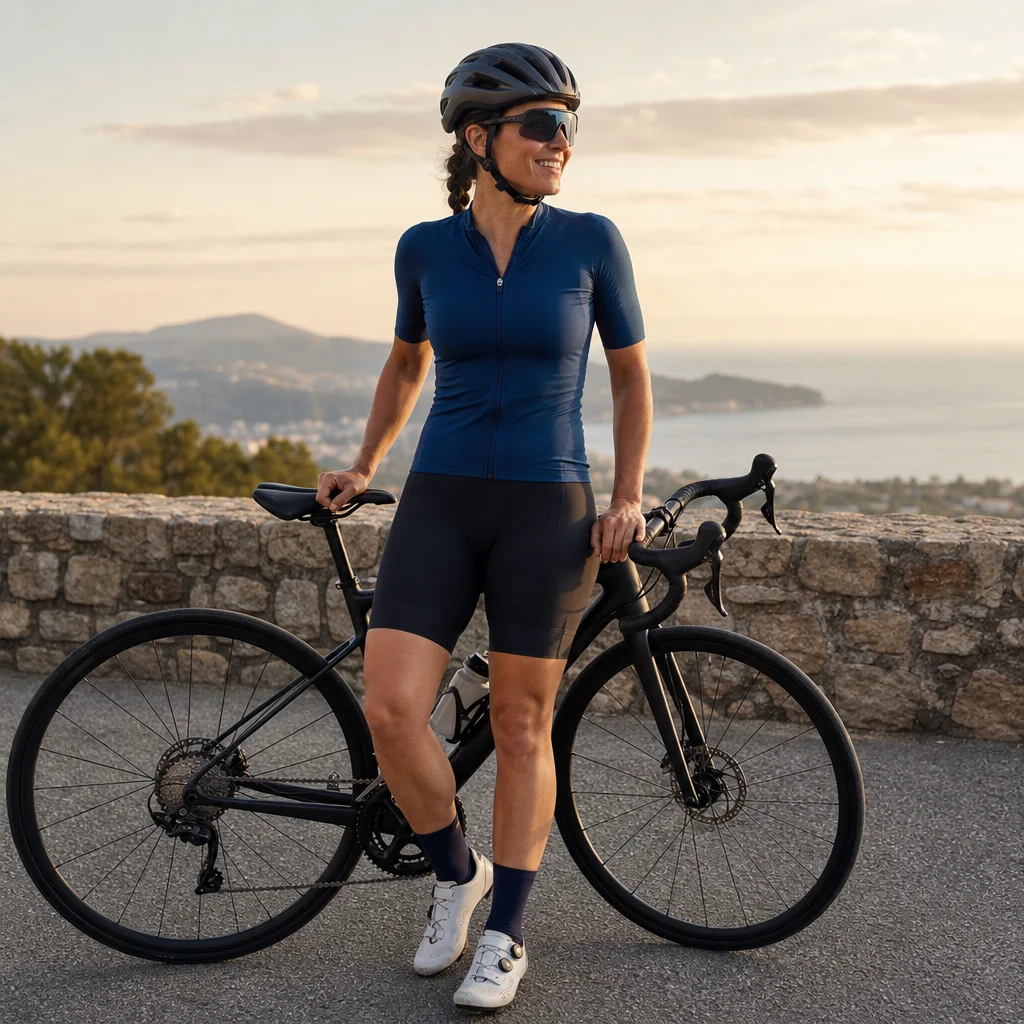
The route you once looked forward to can become a sequence of automatic turns: the same traffic lights, the same hill, the same coffee stop. That doesn’t necessarily mean you need a new bike, a bigger training goal, or a more ambitious itinerary. Often, the better solution is to change what the ride asks you to notice.
The most useful approach is to balance novelty with convenience. A completely new route can restore curiosity, but it may also bring more navigation, traffic, hills, or preparation. Small changes are easier to repeat, while a different purpose—such as practicing cornering or riding with someone else—can make familiar roads feel different.
Start by identifying what feels stale
“Bored” can describe several different problems. Before changing your route, consider which part of riding has lost its appeal.
- The scenery feels repetitive: You need a new visual setting or a different direction.
- The ride feels too predictable: You may want a small challenge or a clear skill focus.
- The effort feels monotonous: Varying pace, distance, or terrain can help.
- The preparation feels inconvenient: A shorter, simpler ride may be more sustainable.
- You’re riding alone too often: Social variation may matter more than route variation.
- You’re tired of pushing yourself: The problem may be accumulated fatigue rather than a lack of motivation.
This distinction matters because the wrong solution can make riding feel like another obligation. If you’re mentally tired, adding a long hillier route may not refresh you. If you’re craving variety, simply riding the same loop harder probably won’t solve the problem.
Make small route changes first
You don’t need to design an entirely new cycling adventure. Try altering one part of your usual ride at a time.
Reverse the direction
Riding a familiar loop in the opposite direction changes the timing of climbs, descents, intersections, and views. A hill that felt insignificant on the way out may become the main feature on the way back. You’ll also approach turns and landmarks from unfamiliar angles.
This is one of the lowest-effort changes because you already know much of the road. It’s a good choice when you want novelty without spending time planning.
Add one connecting road
Choose a single nearby street, trail segment, or parallel road you’ve never tried. It might extend the ride by only a few minutes, but it can break the sense that every outing is predetermined.
Keep the rest of the route familiar. That gives you a reliable way home if the new section is unpleasant, busy, poorly surfaced, or simply not worth repeating.
Change the destination
A different park, bakery, viewpoint, library, or quiet meeting place can give a routine ride a reason to exist. The destination doesn’t need to be impressive. It only needs to create a small decision during the ride: Which way should you go, and what will you find there?
Check opening hours and access details when your plan depends on a specific business or facility. Those details can change, and a closed destination can turn a relaxed outing into unnecessary frustration.
Check the unfamiliar section: Before setting out, review the new roads for traffic, surface conditions, access restrictions, and a simple way to return if the route doesn’t suit you.
Give each ride a different purpose
Route variety helps, but you can also make the same roads feel different by changing the focus of the outing. A ride doesn’t always need to be about going farther or faster.
Ride for observation
Lower your usual pace and pay attention to details you normally miss: the condition of the pavement, seasonal changes in trees, building styles, water crossings, or how the light changes along the route. You’re not trying to produce a workout. You’re giving your attention somewhere new to go.
This works especially well when you’re tired of measuring every ride by speed or distance.
Choose one skill
A familiar route can become a useful practice area. Pick one manageable focus, such as:
- smooth starts and stops
- relaxed shoulders and hands
- steady braking before corners
- looking through turns instead of at obstacles
- maintaining an even cadence on a gentle climb
- shifting before the gradient changes
Keep the goal narrow. Trying to improve everything at once can make a casual ride feel like a test. One skill gives the outing structure without demanding a major performance effort.
Set a time limit instead of a distance target
A 45-minute ride can be more inviting than a 20-mile goal when motivation is low. A time limit also makes it easier to explore a side road without worrying that a small detour will disrupt the entire plan.
You can turn around whenever the time is nearly up. The result may be a shorter ride than usual, but consistency is often more useful than forcing a prescribed distance when enthusiasm is fading.
Compare route changes with social changes
Changing who you ride with can have a larger effect than changing where you ride. A solo cyclist may benefit from a casual group ride, while someone who usually rides in a group may appreciate a quiet outing alone.
Join a low-pressure ride
Look for a group whose pace and distance match your current interest, not an aspirational version of yourself. A ride that requires constant chasing can make a familiar route feel even less enjoyable.
Ask about the expected pace, regrouping habits, distance, terrain, and whether riders are comfortable with someone leaving early. Group norms vary, so clarity helps you choose a suitable outing.
Invite one person instead of a whole group
A single riding partner can provide conversation and accountability without the logistics of a large group. You can also agree on a simple plan: ride for an hour, stop once, and return before either person feels worn out.
Keep some rides deliberately solo
Social riding isn’t automatically better. It can make scheduling harder and may pressure you to match another rider’s effort. Solo rides remain valuable when you want to change direction freely, focus on technique, or ride at an easy pace.
The useful goal is variation, not replacing one routine with another.
Choose between novelty and reliability
Every route option involves trade-offs. A completely unfamiliar route offers the most discovery, but it also carries the greatest planning burden. Your usual route is efficient and predictable, but it may provide little stimulation. A modified familiar route sits between the two.
| Approach | Main benefit | Main drawback | Best when |
|---|---|---|---|
| Same route, new purpose | No planning required | Scenery stays familiar | You want low friction |
| Reversed or slightly modified route | Fresh perspective with limited risk | Change may feel modest | You want easy novelty |
| Completely new route | Strongest sense of discovery | More navigation and uncertainty | You have time and energy to plan |
| Social ride | Conversation and accountability | Less control over pace and stops | You miss shared momentum |
| Short, easy ride | Reduces pressure | May not feel like a full workout | You’re mentally or physically tired |
You don’t need to select the most exciting option. Select the option you’re most likely to enjoy and repeat. A modest route change that gets you riding is more useful than an ambitious plan you keep postponing.
Use a simple rotation instead of chasing constant novelty
You can reduce decision fatigue by keeping a small menu of ride types:
- The reliable loop: Your familiar route for convenience.
- The altered loop: The same route reversed or extended with one new section.
- The skill ride: A short outing with one technique focus.
- The social ride: A ride with a friend or suitable group.
- The exploration ride: A route that requires extra planning.
- The recovery ride: Easy, short, and free of performance expectations.
Rotate based on your energy and interest. You might use the reliable loop on a busy weekday, choose exploration on a free morning, and select a recovery ride after a demanding week.
This system keeps every ride from having to serve the same purpose. Cycling can support fitness, transportation, relaxation, social time, or curiosity. It doesn’t need to maximize all of those at once.
Avoid common motivation traps
Don’t treat longer as the only form of progress
Adding miles can be satisfying, but it isn’t the only way to make riding meaningful. Better pacing, smoother handling, more confidence in traffic, and a more enjoyable routine are legitimate forms of progress.
Don’t make every ride a test
If you turn every outing into a fitness assessment, familiar roads may feel dull because they offer no new result to chase. Leave room for rides where the goal is simply to finish feeling better than when you started.
Don’t overplan the escape route
A new route can become a research project involving multiple maps, stops, surfaces, and contingencies. Set a reasonable planning limit. If the ride requires more preparation than you want to give it, choose a smaller change.
Don’t ignore fatigue
Persistent boredom can sometimes be a sign that you need rest, food, better sleep, or a reduction in training pressure. Taking a day off—or choosing an easy spin—isn't a failure of discipline.
Practical next steps
For your next ride, make one change rather than attempting a complete reset. Reverse your usual loop, add one connecting road, choose a time limit, or invite one compatible riding partner. On the following outing, use a different purpose: observation, technique, conversation, or recovery.
After several rides, keep the changes that make it easier to start and more satisfying to finish. Drop the ones that add stress without adding interest. The aim isn’t to make every ride exciting; it’s to maintain enough variety, flexibility, and ease that your usual route remains one option—not your only reason to ride.