How to Plan a Ride With a Friend Who Is Much Faster
I’ll help you plan a ride that keeps a much faster friend challenged without leaving you overwhelmed, covering route length, pace expectations, regrouping points, communication, and realistic bailout options.
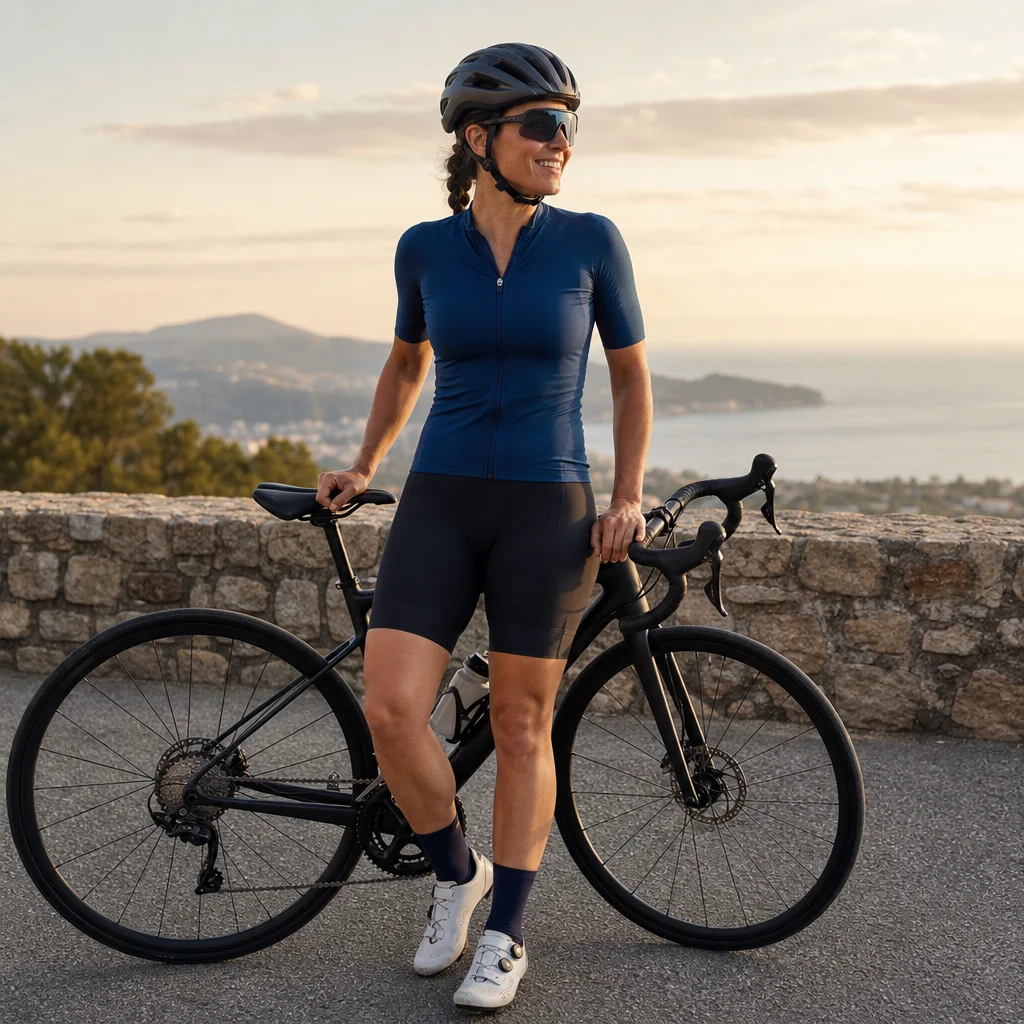
Riding with a much faster friend can be motivating, but it can also turn into a frustrating day if you start with different ideas about pace, distance, or how often you’ll regroup. The goal isn’t to make both riders perform identically. It’s to agree on a ride structure that lets you spend time together without making one person constantly chase or wait.
Start with an honest conversation
Talk about the ride before you meet at the start point. A faster cyclist may assume you want to be pushed, while you may be hoping for a relaxed social ride. Neither expectation is wrong, but leaving it unspoken creates problems quickly.
Discuss:
- How far you want to ride
- How much climbing feels reasonable
- Your expected moving pace and overall pace
- Whether the ride is social, training-focused, or a mixture of both
- How often you’ll stop or regroup
- What happens if one rider needs to shorten the ride
Use specific language rather than saying you’ll “take it easy.” For example, you might say, “I’m comfortable riding for two hours, but I don’t want to spend the whole time riding at my limit.” That gives your friend useful information and makes it easier to build a suitable plan.
You should also be clear about your current limits. If you’re still developing endurance, it’s better to mention that before the ride than to feel pressured to hide fatigue once you’re on the road.
Choose a route that gives you options
A route with several decision points is usually better than one long loop with no easy way out. Look for roads where you can shorten the ride, return by a simpler route, or stop somewhere safe if the planned distance becomes too much.
A useful beginner-friendly route might include:
- A gentle opening section for warming up
- A short loop or out-and-back that can be extended
- One or more reliable regrouping locations
- A midway stop with water, food, or restrooms
- A straightforward route back to the start
Out-and-back routes can work especially well because you don’t have to commit to the full distance at the beginning. You can turn around when you reach your agreed halfway point. Short loops also make it easier for the faster rider to add distance without forcing you to follow.
Avoid making the most difficult climb the only way home. If you’re already tired, a steep final section can remove your ability to choose a sensible bailout. A route that finishes on relatively familiar, manageable roads gives you more control over the day.
Check the route before you leave: Confirm current road closures, construction, trail restrictions, weather, and business hours for planned stops. Conditions can change even when you know the area well.
Agree on a realistic pace
Pace is more than a number on a cycling computer. Wind, hills, traffic, road surfaces, temperature, and your fatigue all affect how hard a ride feels. A pace that looks easy on a flat road may be unsustainable on a long climb.
Instead of promising to maintain a precise speed, describe the effort you want. You might agree that you’ll ride at a conversational effort on flat roads and climb at a pace that allows you to keep turning the pedals without going into the red.
Ask your faster friend not to set the pace by instinct. Stronger riders can unintentionally accelerate after every corner, rise, or stop sign. Those small increases can leave a less experienced rider struggling even when the average speed looks reasonable.
It can help to define a few simple rules:
- The slower rider sets the steady group pace.
- Neither rider treats hills as unannounced races.
- The faster rider waits at agreed locations rather than making the slower rider chase.
- Anyone can request a slower pace or a stop without needing to justify it.
If your friend wants a workout, separate that goal from the shared ride. They could ride ahead for a short interval and return, add extra distance before or after, or complete additional efforts while you take a planned break. That preserves the social part of the ride without requiring you to match their training pace.
Plan how you’ll regroup
“Wait for me” is too vague to be a useful plan. Decide where the faster rider will stop and how you’ll know you’re in the right place.
Good regrouping points are easy to identify and safe to wait at, such as:
- The far side of a major intersection
- A clearly named park entrance
- The top of a climb with room away from traffic
- A café, store, or public facility
- A particular trail or road junction
Avoid choosing places where someone would have to stand in a narrow shoulder, on a blind corner, or close to a busy intersection. The faster rider should stop somewhere visible and predictable, not simply wherever they happen to notice the gap.
Set a maximum wait time if the route has confusing turns. For example, the faster rider might wait 10 minutes at a planned point. If you don’t arrive, they should retrace the route or use an agreed communication method rather than continuing indefinitely and assuming you turned around.
The slower rider has responsibilities too. Stay on the planned route, pay attention to navigation, and communicate if you’re stopping unexpectedly. If you miss a regrouping point, don’t keep riding blindly in the hope of finding your friend. Stop somewhere safe and contact them.
Use communication that works while riding
Before starting, make sure both riders know how they’ll communicate. A phone is useful, but it may not work everywhere and can be difficult to hear near traffic. Decide whether you’ll use calls, messages, cycling headsets, hand signals, or a combination.
Agree on a few basic phrases or signals:
- “Slow down” or “I need a break”
- “I’m stopping”
- “Turn ahead”
- “Hazard” or “car behind”
- “I’m okay, but I need to shorten the ride”
Don’t wait until you’re completely exhausted to speak up. Early warnings give you and your friend more choices. A short pause or small route adjustment is much easier to manage than a long recovery stop after you’ve gone far beyond your limit.
Build in bailout options
A bailout option is a planned way to shorten, simplify, or end the ride. It isn’t a failure. It’s part of sensible ride planning, especially when two riders have different fitness levels.
Possible bailouts include:
- Turning back at a halfway point
- Taking a flatter parallel road
- Skipping a planned climb
- Returning directly to the start instead of completing the loop
- Using public transportation, a taxi, or a support vehicle where available
- Calling for a pickup from a predetermined location
Check practical details before relying on one. A transport service may have rules about bicycles, and a rural road may have no reliable pickup access. If the plan depends on a shop, station, or café, confirm that it’s on the route and likely to be available when you need it.
You should also carry enough water, food, repair supplies, identification, and battery power to handle a delayed return. Your friend can carry shared tools, but don’t assume they’ll always be close enough to help. Each rider should have a way to deal with a basic puncture or mechanical problem, or both riders should explicitly agree on how repairs will be handled.
Decide how drafting will work
Riding behind a faster cyclist can reduce the effort needed to overcome wind, but it shouldn’t be treated as a requirement. If you’re not comfortable following closely, say so. Leave enough space to see the road and react to sudden braking, potholes, debris, or traffic.
The faster rider should avoid abrupt changes in speed or direction. Smooth acceleration, clear signals, and a steady line make it easier for a less experienced rider to follow. On unfamiliar roads or in traffic, riding side by side may not be practical or permitted, so follow local road rules and use a single-file formation when appropriate.
If the difference in speed is large, drafting may only solve part of the problem. You can still become tired from repeated accelerations, climbs, and stops. Treat it as one tool, not a substitute for an agreed pace.
Decide what success means
A successful shared ride doesn’t require finishing the longest possible route. It might mean reaching a scenic viewpoint, practicing riding together, completing a comfortable two-hour outing, or finishing with enough energy to enjoy the trip home.
Agreeing on that goal helps prevent the faster rider from quietly turning the ride into a personal distance challenge. It also gives you permission to adjust the plan when conditions change.
If the ride is meant to be social, protect time for conversation and stops. If it’s partly training, decide when the training begins and ends. For example, you could ride together for the first hour, separate for a short interval, and regroup at a café. A clear structure is kinder than expecting one rider to guess when the other wants to push harder.
A simple pre-ride checklist
Before you roll, confirm:
- The route, distance, climbing, and expected duration
- The opening pace and effort level
- Planned regrouping points
- How long the faster rider will wait
- Communication methods and emergency contacts
- The shortest route back
- Food, water, repair supplies, and battery needs
- What will happen if either rider becomes tired, delayed, or uncomfortable
Then start conservatively. The first part of the ride should feel easier than your maximum sustainable effort. You can always extend the route or increase the pace later; you can’t recover instantly from starting too hard.
The best plan gives the faster cyclist room to enjoy their strengths while giving you control over your own effort and decisions. Be specific before the ride, regroup predictably, speak up early, and treat the bailout route as a normal option. That approach makes it far more likely that both of you will finish the ride feeling good about the next one.